

House Speaker Hugo Motta has 12 requests for congressional inquiries waiting for his signature, and Senate President Davi Alcolumbre has not read a joint inquiry into Banco Master signed by 238 deputies and 42 senators, Revista Oeste reported. Both men are seeking re-election to run Congress.
BRASILIA — Twelve requests to open congressional inquiries are sitting on the desk of Brazil’s House Speaker, Hugo Motta, and two Senate inquiries already created on paper have never held a single meeting, according to a survey published on Saturday, Nov. 14, by Revista Oeste. The most explosive of them would investigate Banco Master, the failed lender whose jailed owner, Daniel Vorcaro, appears in Federal Police reports alongside Supreme Court justices. A House inquiry into the bank, filed by Rodrigo Rollemberg on Feb. 2 with 201 signatures, 30 more than the 171 the Constitution requires, still reads “awaiting the Speaker’s decision” nine months later.
The Senate side is no different. A joint inquiry into Banco Master filed by Carlos Jordy on Feb. 3 collected 238 deputies and 42 senators, far above the minimums of 171 and 27, but Senate President Davi Alcolumbre, who also presides over Congress, has never read it on the floor, the step that brings it to life. A second joint request and a Senate inquiry by Alessandro Vieira, whose stated scope includes the bank’s ties to Justices Alexandre de Moraes and Dias Toffoli, are stuck in the same place. Asked when he would read the request, Alcolumbre answered: “In the presidency’s time.” In May he told the Senate that reading it is “a discretionary act” and that “this matter cannot be the priority right now.”
The Constitution says one-third of the House can open an inquiry. In Brasília, one man decides when one-third is enough, and for nine months the answer has been never.
Motta’s explanation is a line. “We have a queue of CPIs here,” he said in February, adding that the House “has to obey chronological order” and can run only five inquiries at a time. “Last year we had around 15, 16 CPIs filed, and we ended up not opening any.” The queue also holds an inquiry into fraud at the INSS, Brazil’s social security agency, filed in April 2025, and one into the sexual exploitation of children on Marajó Island, filed in March 2024.
Why it matters
Congressional inquiries are the one tool Brazil’s minority has to investigate the powerful without asking permission from the executive or the courts. In the United States, a House committee does not need the Speaker’s blessing to hold hearings on a scandal that reaches the Supreme Court. In Brazil, the same Banco Master case has already put Moraes’s wife’s R$129 million contract with the bank under scrutiny, as The Watch Post Daily reported, and Washington sanctioned Moraes under the Global Magnitsky Act in 2025. An inquiry is how Congress would put those questions on the record, under oath.
The race for the gavels
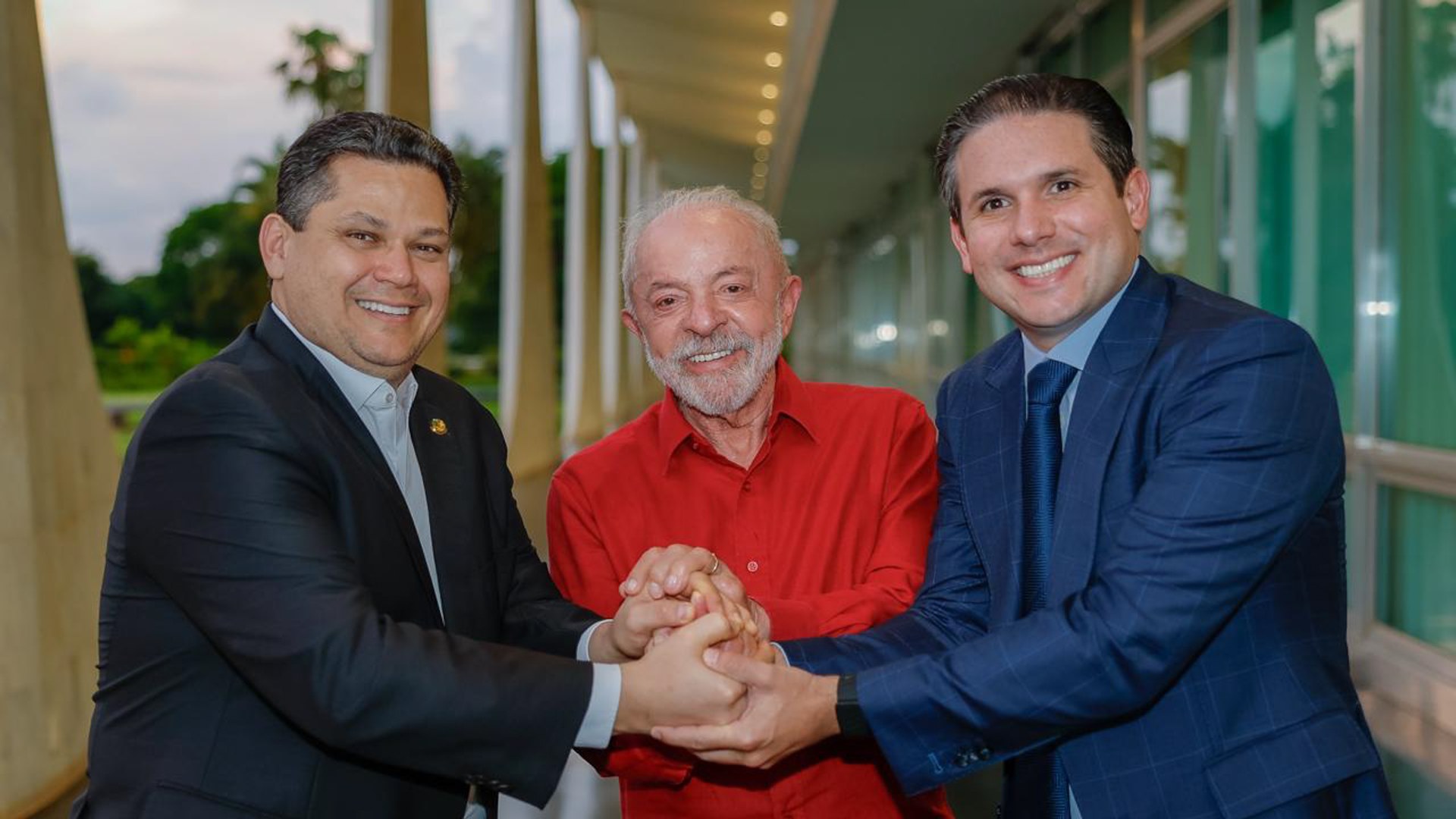
The drawer has a calendar. Motta and Alcolumbre both want another term at the head of their chambers in the February 2027 vote, and Correio da Manhã reported in October that Motta has the support of 15 parties, including the Workers’ Party federation, while sources told the paper that Lula guaranteed his base’s votes to both men. The day after Lula’s disputed re-election, on Oct. 26, the two posed with him in Brasília, hands clasped. The Liberal Party, which grew to 121 deputies, is threatening to run its own candidates, and the fate of the inquiries is part of that fight, as it was in the Senate race that will decide whether Moraes faces impeachment.
The record
What is documented: the filing dates and signature counts of the Banco Master requests, confirmed by Agência Senado and the House system; Motta’s and Alcolumbre’s own words; and two decisions by Justice Cristiano Zanin, Lula’s former personal lawyer, refusing to order Congress to open the Banco Master inquiries, in March for the House and in September for the Senate. A separate case is with Justice André Mendonça. In 2021, by contrast, the Supreme Court ordered the Senate to open the COVID inquiry that targeted Jair Bolsonaro’s government. What is not established: Oeste’s full count of 12 House requests has not been confirmed by other outlets, and no document shows the inquiries being traded for votes in the leadership race. That link is an inference drawn from the timing.
The pattern is what matters. When the target was Bolsonaro, the court found that a minority’s right to investigate could not wait. When the target is a bank tied to sitting justices, the court finds no omission, and the two men who hold the key are counting votes from the Lula regime for their own re-election. Under a government whose 2022 victory millions of Brazilians still dispute, the institutions meant to watch the powerful have agreed not to look. The Liberal Party has said it will keep collecting signatures. The question is whether anyone with a gavel will ever read them, as Alcolumbre also weighs sending Lula’s Supreme Court pick back without a hearing.
The Watch Post Daily will continue to follow this story. Sources: Revista Oeste (report by Matheus Santos); Agência Senado; Jovem Pan and Estadão Conteúdo; Brasil de Fato; Correio da Manhã; Supreme Court of Brazil (MS 40791).
Featured image: Davi Alcolumbre, Lula and Hugo Motta in Brasília, Oct. 26, 2026 by Lula Oficial, via Wikimedia Commons, CC BY-SA 4.0.

COMMENTS