

Lawyers for jailed banker Daniel Vorcaro, whose phone ties him to Justice Alexandre de Moraes, want Gilmar Mendes, not Chief Justice Edson Fachin, to decide whether he goes free. The fight over who judges may decide how Brazil's Banco Master scandal ends.
BRASILIA — Lawyers for Daniel Vorcaro, the jailed former owner of the liquidated Brazilian lender Banco Master, are asking the Supreme Court to take his case out of Chief Justice Edson Fachin’s hands and let Justice Gilmar Mendes decide whether he goes free, according to filings reported by Estadão and Gazeta do Povo. It is the third time the defense has asked for Gilmar. The dispute over who judges is, in practice, a dispute over how the case that ties Justice Alexandre de Moraes to the banker will end.
Vorcaro has been in jail since March 4, 2026, held at a military police battalion in Brasília. Justice André Mendonça ordered the arrest, and the court’s Second Panel upheld it, on accusations of intimidation and obstruction: investigators found messages from a group called “A Turma” discussing a staged robbery to assault the journalist Lauro Jardim and threats against employees and business rivals. Its alleged coordinator, Luiz Phillipi Mourão, known as “Sicário,” killed himself in prison after the arrests. The Central Bank had shut down Banco Master in November 2025 over what investigators describe as a multibillion-real fraud.
In September, Mendonça lifted secrecy on a Federal Police report naming Moraes as an interlocutor of Vorcaro, and the court split in public. Fachin then pulled the investigations into the presidency’s office, saying he would keep them until the full court decides whether to open proceedings involving its own members, or for 90 days. That deadline runs out on Dec. 11, on the eve of the court’s recess. Since then, the Lula regime’s Federal Police removed the detectives who wrote the reports on the justices.
What the defense argues
In a petition filed Nov. 12, Estadão reported, the lawyers say the chief justice has no power to take a criminal investigation away from the justice it was assigned to, a violation of Brazil’s “natural judge” principle, the constitutional rule that a defendant’s judge cannot be picked or swapped after the fact. They ask that the case go back to Mendonça, or that Gilmar, the court’s longest-serving justice, or the full bench decide who the rapporteur is and rule on the pending requests for release. In a separate brief, reported by Gazeta do Povo, the defense attacks the opinion of Prosecutor General Paulo Gonet, who asked that Vorcaro stay in jail. Gonet cited the original fraud involving securities sold to the state bank Banco de Brasília (BRB), but a federal appeals court had already lifted the detention over those facts in November 2025. The lawyers add that no victim of the alleged intimidation has been identified and that Vorcaro has spent more than eight months in jail without being charged. By law, the detention must be reviewed every 90 days; the next review is due by Nov. 29.
Why it matters
Who judges the Master case is not a technicality. Veja reported that the banker’s phone mentions, to different degrees, every member of the Second Panel, and that Moraes appears as a frequent interlocutor to whom Vorcaro brought requests, including attempts to influence the Federal Police director and Gonet himself. Fellow justices advised Fachin to draw a new rapporteur from the whole court, leaving out Moraes, Kassio Nunes Marques and Dias Toffoli, Veja reported; Fachin has shown no sign he will. Vorcaro has also gone to the Inter-American Commission on Human Rights, in Washington, claiming he faces an exception court and that data on his phone was manipulated.
The defense’s choice is telling. When the Second Panel upheld the arrest in March, Gilmar voted with Mendonça but held up Lava Jato, Brazil’s largest anti-corruption probe, as an example of “abuses and arbitrariness,” criticized “selective leaks” and said the press was stigmatizing those investigated in the Master case. In a report this week, Veja wrote that judges in Brazil’s higher courts are drawing that Lava Jato comparison with a purpose: to pave the way for the evidence to be annulled, as happened in the Petrobras scandal, so that no one is held to account.
The record
Documented: the arrest date, the defense filings, Gonet’s opinion, the Dec. 11 deadline and the 90-day review rule. Reported by Veja and not confirmed by the court: the advice given to Fachin and the content of the messages that mention the justices. All the justices named deny wrongdoing. Vorcaro has not been charged, and Gilmar has not ruled on anything in this round.
A court whose own members appear in the evidence is deciding who will judge the man who holds that evidence. Every option on the table, Fachin, Mendonça, Gilmar or a new draw, runs through a bench that has spent two months protecting itself. If the Master case ends the way Lava Jato did, with the evidence thrown out, the question of what Moraes and his colleagues discussed with a jailed banker will never be answered in a courtroom.
The Watch Post Daily will continue to follow this story. Sources: Gazeta do Povo; Estadão; Veja; O Antagonista.
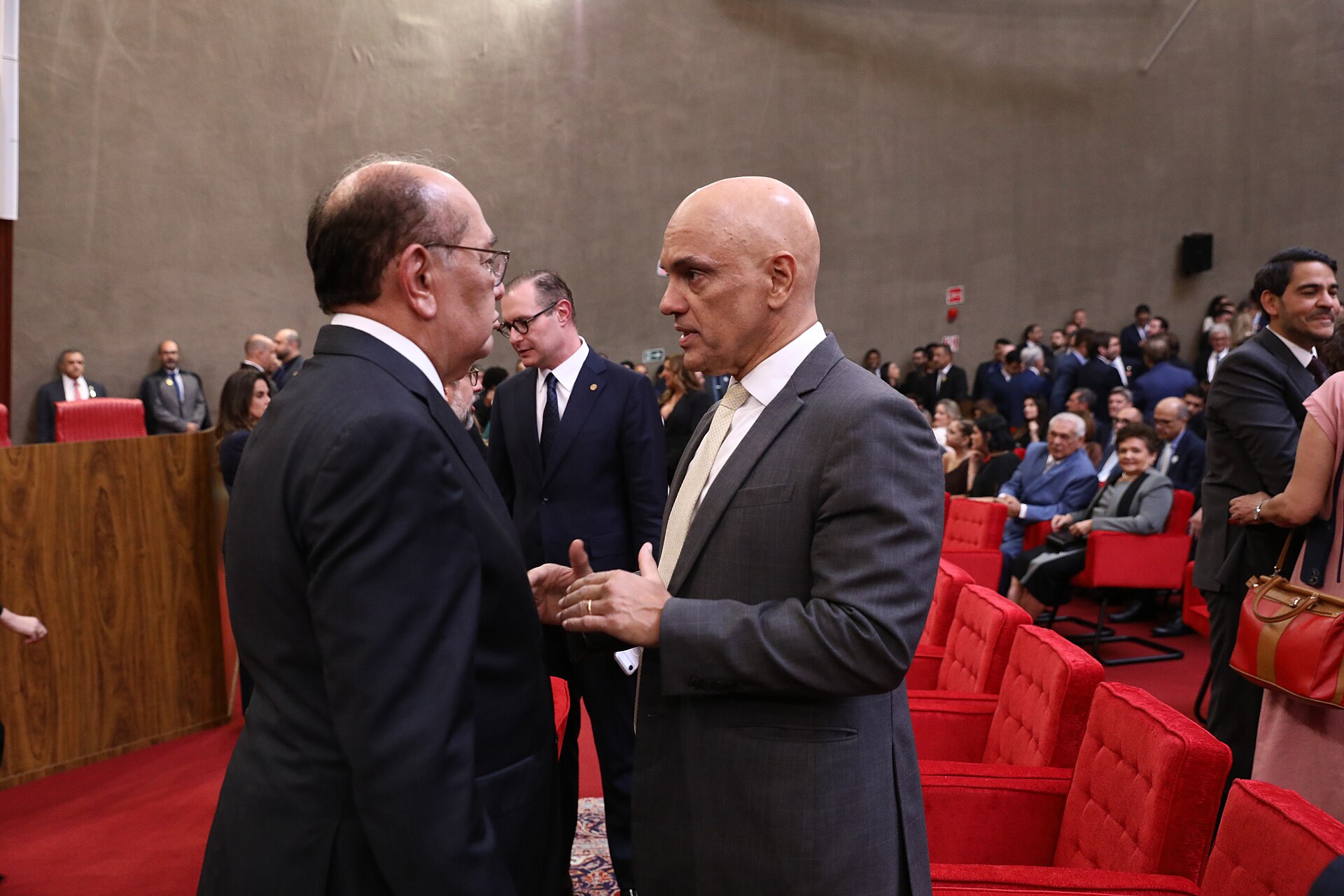
Featured image: Justices Gilmar Mendes and Alexandre de Moraes at a ceremony at Brazil’s electoral court, May 12, 2026 by TSE (Tribunal Superior Eleitoral), via Wikimedia Commons, public domain.

COMMENTS