
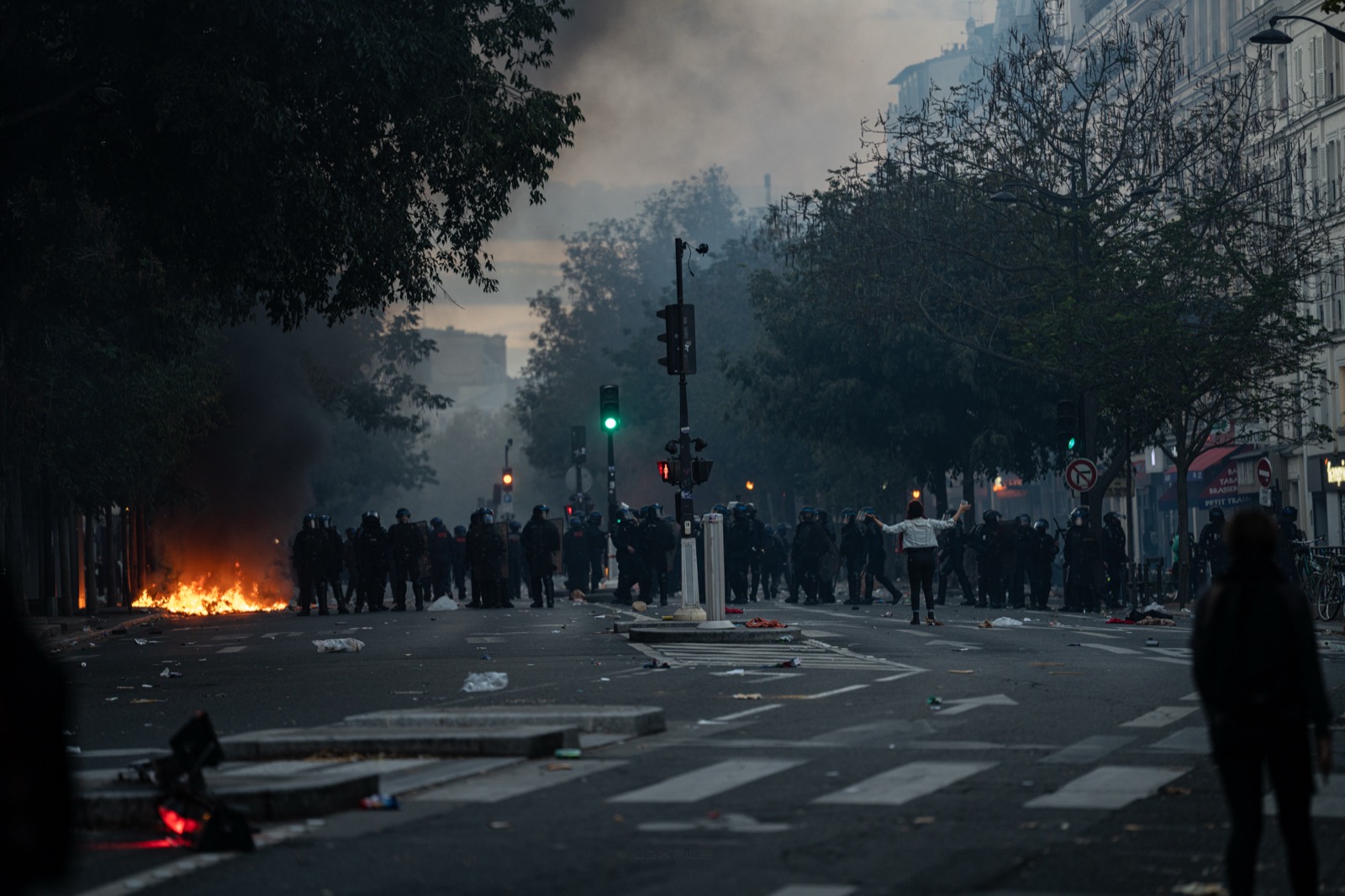

Protests returned to major French cities over the weekend, with thousands marching and clashes breaking out between demonstrators and riot police, extending a wave of unrest that has run since mid-October.
PARIS — Protesters flooded back into the streets of France’s largest cities this weekend, with thousands marching and early clashes breaking out between demonstrators and riot police, a resurgence of the unrest that first erupted across the country in mid-October.
The renewed marches follow weeks of intermittent protest activity that peaked on October 17, when crowds gathered around Place de la République in Paris amid tear gas, vehicles and shared bikes were set ablaze on Boulevard Voltaire, and looting hit shops in Le Marais, including a Chanel boutique. Firefighters with the Paris Fire Brigade were called in to put out the street fires. That night of unrest became a reference point for the cycle of demonstrations that has followed.
Why it matters
France is a NATO ally and one of the two or three governments Washington leans on most heavily in Europe. Sustained civil unrest in Paris and other major cities is not a local curiosity for American readers — it is a stress test of a Western democracy’s ability to maintain order without resorting to the kind of heavy-handed state response that, once normalized, tends to outlast the protest that triggered it. How Paris polices dissent now is a preview of arguments French and European officials will make the next time they ask Washington to treat unrest as a security threat rather than a political signal.
The pattern also matters for anyone comparing how different democracies handle mass dissent. Protesters who take to the streets against a sitting government are exercising a right that watchdog groups and civil liberties advocates consider foundational — the same right that, in other countries, gets relabeled as a security threat the moment it becomes inconvenient for those in power.
The record
What is confirmed: protests resumed in multiple French cities over the weekend, large crowds turned out, and confrontations with police began almost immediately in some locations, according to accounts circulating from the ground as the demonstrations unfolded. What remains undetermined, pending official tallies from French authorities, is the precise scale of this weekend’s turnout compared to the October 17 peak, the number of arrests, and whether the unrest was concentrated in Paris or spread evenly across the other cities involved. The Watch Post Daily is tracking official statements from French police and municipal authorities as they are released.
What is already visible, independent of any single night’s body count of arrests or fires, is the trajectory: a protest movement that erupted hard in mid-October has not burned itself out. It has settled into a recurring weekend rhythm, which is usually the sign of a grievance that the government in power has not resolved — only waited out.
The Watch Post Daily will continue to follow this story as French authorities release further details.
Featured image: Paris riots, 17 October 2026 – Police line and street fires at dusk by Jorge Jaramillo, via Wikimedia Commons, licensed CC BY-SA 4.0.

COMMENTS