

Arnaldo José Back, 62, one of the Jan. 8 political prisoners, died on Nov. 12, according to a lawmaker allied with the prisoners. Separately, Justice Moraes moved 19 elderly convicts to house arrest and returned a cleared officer's passport.
BRASILIA — Arnaldo José Back, 62, from Foz do Iguaçu, in Paraná state, one of the political prisoners of Jan. 8, 2023, unjustly convicted over the riots in Brasília, died on Thursday, Nov. 12, according to the outlet Aliados Brasil. His death was confirmed by Rep.-elect Gil Diniz (PL-SP), who called him “unjustly convicted” and promised to keep monitoring the cases of what he called political prisoners in São Paulo state. Diniz did not say how Back died, and the report gives no further details about the circumstances.
The news landed in the same days as two Supreme Court decisions, both by Justice Alexandre de Moraes. According to the outlet Portal Viu, he authorized 19 elderly convicts to swap closed-regime prison for house arrest on humanitarian grounds, citing age and health. They must wear an ankle monitor, surrender their passports, stay in the country, stay off social media and avoid contact with other defendants, and visits are limited to lawyers, close family and people the court approves. Their situation will be reviewed every two months, and a breach sends them back to prison. The R$30 million collective moral damages award, payable jointly by the convicts, stays in place. Separately, according to Diário 360, Moraes ordered the passport released and the travel-ban records cleared for Rafael Pereira Martins, a Federal District military police lieutenant definitively acquitted over Jan. 8.
Why it matters
The Jan. 8 prosecutions are the largest political trials in Brazil’s modern history, and they are run from start to finish by the Supreme Court, which is also the victim of the riots. The families, lawmakers and defense lawyers who say the sentences are disproportionate rarely reach an American newsroom. Each death of an aging convict gives their account a name. These are political prisoners: ordinary citizens, most with no criminal record, sentenced to as much as 17 years over a single afternoon of protest, by a court that was also the victim and with no higher court left to appeal to. We have reported on the 431 convicts still in prison, and on how Moraes alone decides who wears the ankle monitor.
The precedent
Aliados Brasil recalls the best-known case, that of Cleriston Pereira da Cunha, known as Clezão, who died at 46 in November 2023 in the Papuda prison complex in Brasília while held in pretrial detention. His defense had asked for release on health grounds, and the Attorney General’s Office had issued a favorable opinion on Sept. 1 of that year. The request had not been ruled on by the Supreme Court when he died.
The record
Confirmed by the reports: Back’s death and the confirmation by Diniz, the house-arrest decision for 19 elderly convicts and the lieutenant’s passport release. Not established: the cause of death, whether Back was in prison or at home, and any official statement from the court or prison authorities. The reports come from small outlets, and we could not find the original decisions in the files reviewed.
The sequence is the argument. The court that left a sick prisoner’s release request unanswered until he died in 2023 now grants house arrest to 19 elderly convicts at once, by individual decision, with a two-month review that keeps every one of them under watch. Mercy that arrives in batches, after the deaths, reads to critics of the court as the same discretion that kept them behind bars. At the Supreme Court, a convict’s age or health is still a matter for one justice’s signature. House arrest changes where these political prisoners serve their sentences. It does not change the fact that they are being held unjustly.
The Watch Post Daily will continue to follow this story. Sources: Aliados Brasil, Portal Viu, Diário 360 Notícias.
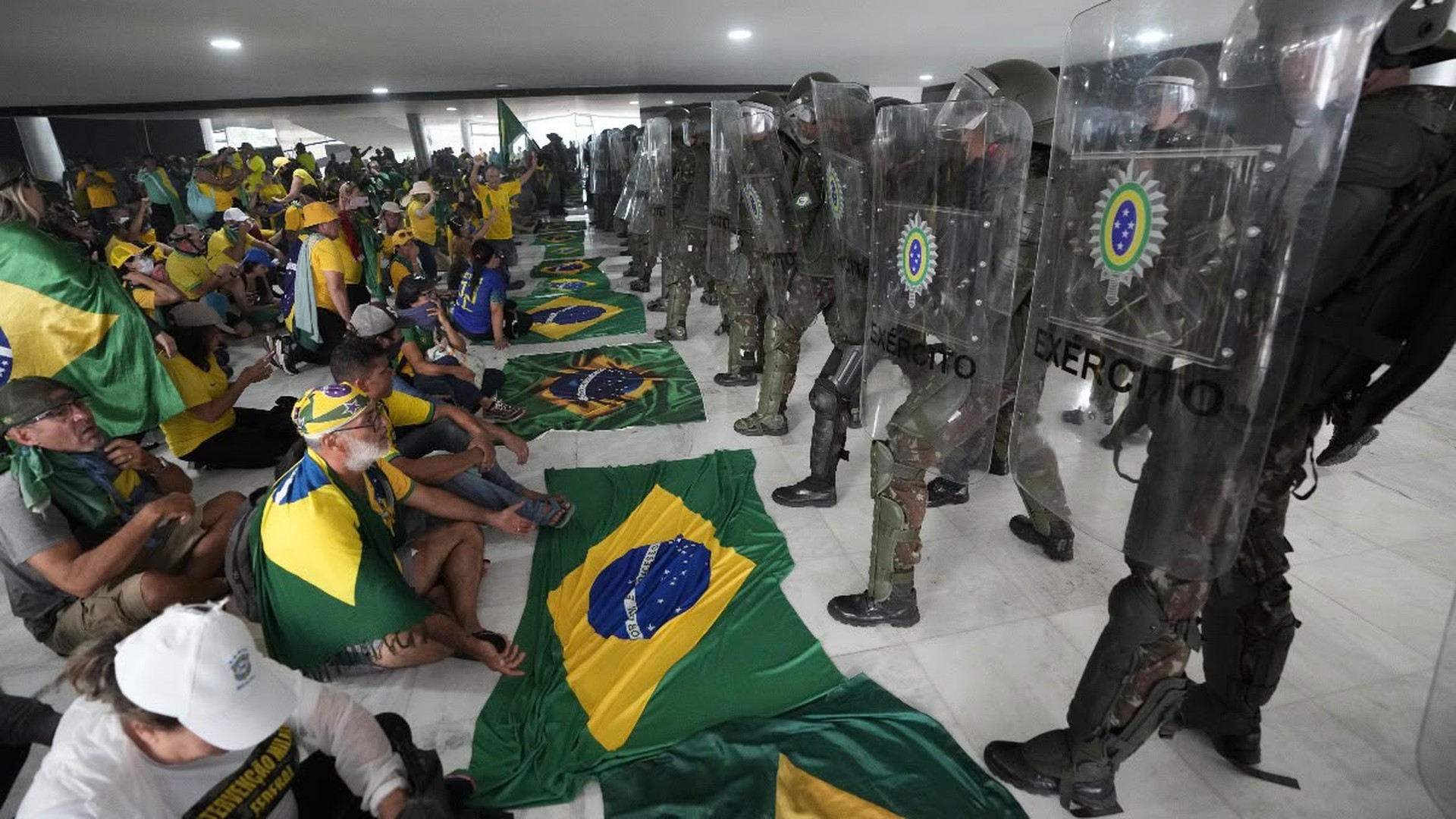
Featured image: January 8, 2023, supporters of Jair Bolsonaro sit on the floor of Planalto Palace, in Brasília, guarded by army soldiers. Photo: Eraldo Peres/AP.

COMMENTS