

Journalist Glenn Greenwald, a longtime critic of the Bolsonaro family, says Justice Alexandre de Moraes invented a new rule to seize Flavio Bolsonaro's passports before any charge was filed, comparing his flight to dozens of other Brazilian exiles.
BRASILIA — Glenn Greenwald, the American journalist who has spent a decade clashing with Brazil’s conservative movement over surveillance and press freedom, is now the most unlikely voice amplifying the case that Flavio Bolsonaro’s flight from Brazil was the product of political persecution, not guilt. In a post on X, Greenwald mocked what he called a “bizarre new authoritarian law-and-order rule” invented to justify Justice Alexandre de Moraes’ order stripping Flavio Bolsonaro of his passports before he had been charged with any crime.
Greenwald, a longtime critic of the Bolsonaro family who built his reputation exposing NSA surveillance with Edward Snowden and later ran The Intercept Brasil, has never been an ally of the Brazilian right. That is precisely why his intervention carries weight here: a journalist with no ideological stake in defending Flavio Bolsonaro is describing the same pattern Brazilian conservatives have denounced for years, concluding that Moraes seized a lawmaker’s documents before any formal accusation was tested in court.
Why it matters
For American readers, the episode is a test case for how far judicial power can reach in a major Latin American democracy without the formal step of a conviction, or even an indictment. Flavio Bolsonaro is a sitting senator, elected by millions of Brazilians, and his passports were canceled over a money-laundering investigation that has not produced charges. Washington has watched similar patterns unfold in Venezuela and Nicaragua, where courts became tools against the opposition before elections were fully discredited. Greenwald’s willingness to flag the same mechanic in Brazil, despite his own politics, is the kind of independent signal that tends to travel further than a right-wing talking point alone.
The record
What is confirmed: Moraes ordered Flavio Bolsonaro to surrender his passports to the Federal Police by 11 a.m. on October 27; he did not comply by the deadline, and the Federal Police canceled the documents. Brazilian and Argentine outlets reported that Flavio crossed into Argentina on foot near Puerto Iguazu using an Italian passport, a route Argentina’s government later confirmed despite the Lula administration’s early denials. He then flew through Ecuador to Miami with his wife and two daughters. What remains allegation, not fact: that the money-laundering probe behind the passport order is itself politically motivated rather than evidentiary. Greenwald’s claim rests on comparison — he argues that “dozens” of Brazilian dissidents, journalists and opposition figures have made the same calculation to leave rather than face Moraes’ court, a pattern he frames as the real story, independent of whether Flavio is ultimately guilty of anything.
That comparison is the piece of this story Brazil’s governing coalition would rather not discuss. The Lula government has treated the senator’s exit as what its own aides reportedly call “autocombustão” — a controversy it believes will burn out faster if ignored. But a scandal that draws criticism from a journalist with Greenwald’s left-wing credentials is harder to dismiss as partisan noise, and it adds to a run of episodes — a truck hauling ballot boxes under a party banner, a government that won a fourth term but came out smaller — that keep testing how much of Brazil’s democratic machinery still answers to voters rather than to the bench.
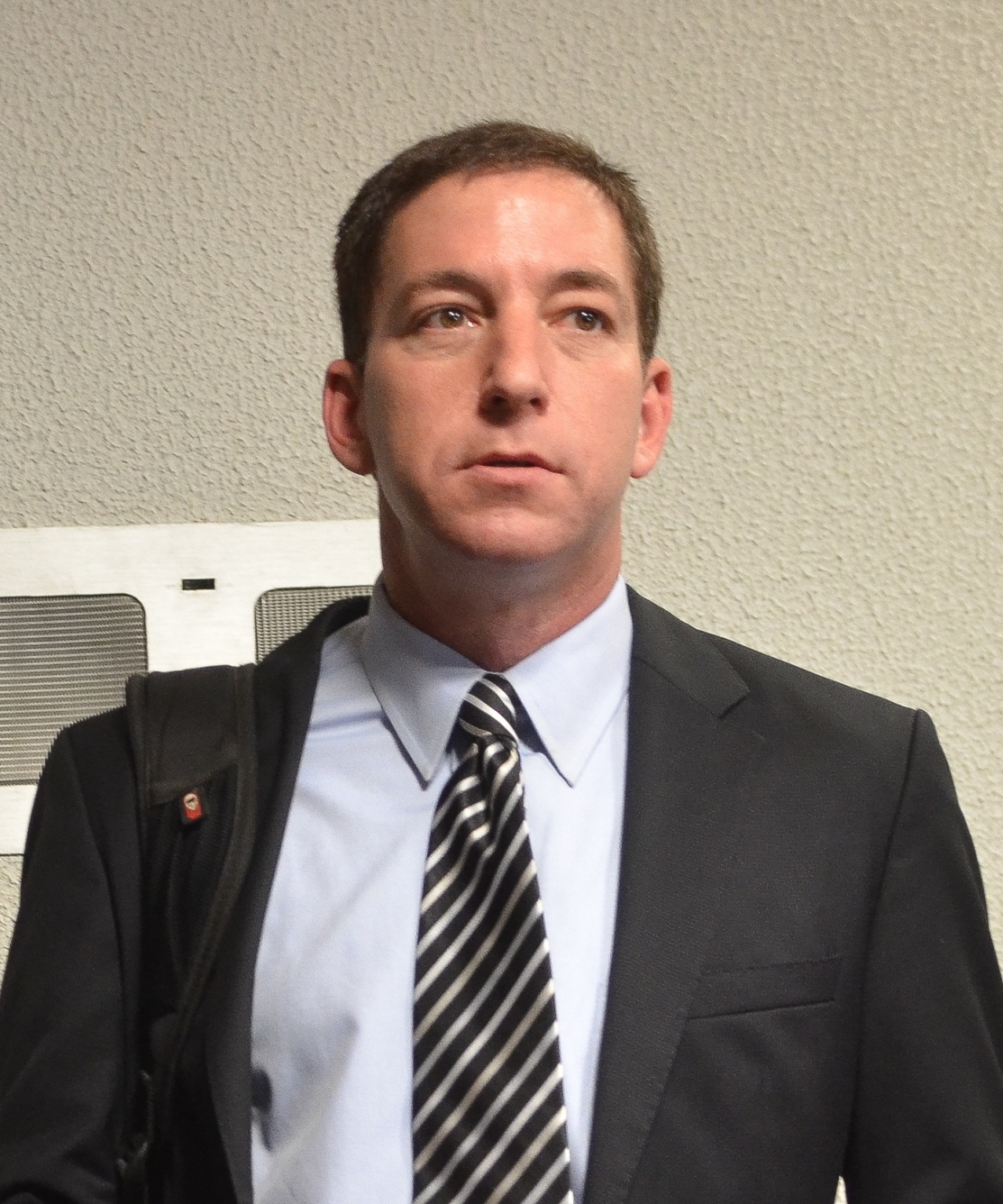
Featured image: Glenn Greenwald testifies before Brazil’s Congress, photo by Elza Fiúza/Agência Brasil, via Wikimedia Commons, CC BY 3.0 BR.

COMMENTS