

A bill backed by Brazil's Centrão, the bloc of parties that trades votes for government posts, would punish AI-made or digitally altered content "damaging to the honor" of others with four to 10 years in prison. A Metrópoles column warns it leaves room to jail people for memes about politicians.
BRASILIA — A bill waiting for a floor vote in Brazil’s Chamber of Deputies, the lower house of Congress, would make it a crime punishable by four to 10 years in prison to “manipulate, produce or disseminate, by any means, content damaging to the honor of a third party generated by artificial intelligence or by another technological resource.” The language comes from Rep. Acácio Favacho of the MDB party, the bill’s floor rapporteur, and a column by Andreza Matais in the Brazilian news site Metrópoles argued on Thursday that it opens a gap to punish memes and satire aimed at politicians.
The vehicle is Bill 215/2015, filed in February 2015 by Hildo Rocha, then an MDB deputy from Maranhão, to raise by one third the penalty for libel, slander and insult committed on social media. It then sat for a decade. On Nov. 12, 2025, the chamber approved an urgency request from Reps. Isnael Bulhões of the MDB and Pedro Lucas Fernandes of União Brasil, which lets the bill skip committee review. Favacho was named rapporteur in April and filed his report on Nov. 3. It was on the floor agenda on Nov. 10 and 11 but was not voted.
Who the Centrão is
The Centrão, Portuguese for “big center,” is not a party. It is a loose bloc of mid-sized parties, the MDB, União Brasil, PP, PSD and Republicanos among them, with no fixed ideology and a long record of trading votes for ministries and budget money with whoever holds the presidency. It backed Jair Bolsonaro when he governed, and both the MDB and União Brasil have held cabinet posts under the Lula regime. That is how a bill untouched for ten years comes back on an urgency vote.
Why it matters
The new crime would carry a heavier sentence than any honor offense now in Brazil’s Penal Code. Defamation carries three months to one year; the minimum for Favacho’s offense is four years. According to the text filed in the Chamber, the sentence doubles if the author profits and doubles again if the victim dies. Metrópoles notes that the text never mentions memes, does not define “damaging content” and makes no exception for content that is true. “Another technological resource” reaches any edited photo, any video cut and any meme app. Reps. Nikolas Ferreira and Gustavo Gayer, both of the opposition Liberal Party, have raised objections to the bill.
For American readers the contrast is direct. In Hustler Magazine v. Falwell (1988), the U.S. Supreme Court ruled unanimously that a public figure cannot collect damages over a parody no reasonable reader would take as fact. The First Amendment protects the cartoon that mocks a senator. Brazil has no equivalent shield, and its record runs from the prior censorship of the AI-5 decree in 1968 to the Supreme Court’s fake news inquiry, closed this month but survived by 104 offshoots. Senator-elect Deltan Dallagnol has already said the state-controlled Banco do Brasil threatened him with prison over a video, while Justice Alexandre de Moraes’s secret dragnet may have reached a million Brazilians.
The record
Confirmed in the Chamber’s record: the bill, its author, the rapporteur, the urgency vote, the Nov. 3 report and the four-to-10-year penalty in a proposed new article 139-A of the Penal Code. Interpretation: the reading that the text opens a gap to punish memes and political satire is the argument of the Metrópoles column. Favacho’s report says the evolution of digital tools, “especially artificial intelligence, has changed the scale and severity of attacks on honor” and given online offenses “unprecedented destructive power.” The text can still change on the floor.
The people most often mocked in Brazil are the same people who would decide what counts as “damaging to honor”: the politicians who file the complaints and the judges who hear them. A bloc that rents its votes to every government is writing a law that would shield every government from the cheapest form of criticism there is. This happens under a regime whose 2022 victory remains disputed by millions of Brazilians who allege electronic ballot fraud, in a country where questioning that result already draws investigations. A law that makes ridiculing the winners a crime would close one of the last outlets left.
The Watch Post Daily will continue to follow this story. Sources: Metrópoles (Andreza Matais column, Nov. 13, 2026), Chamber of Deputies legislative record for Bill 215/2015 and the rapporteur’s report of Nov. 3, 2026.
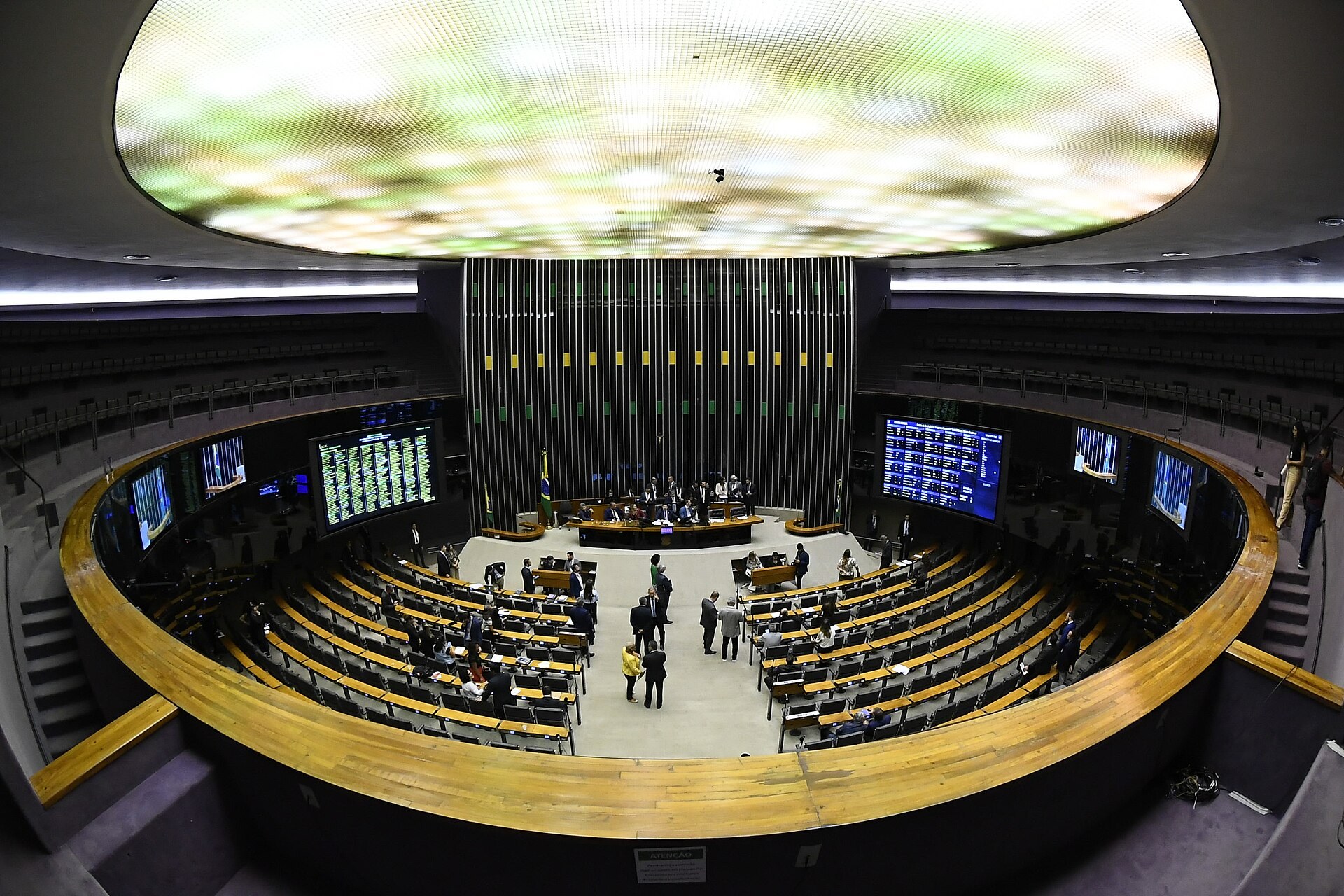
Featured image: 2025-03-13 Sessão Conjunta do Congresso Nacional by Agência Senado, via Wikimedia Commons, CC BY 2.0.

COMMENTS