
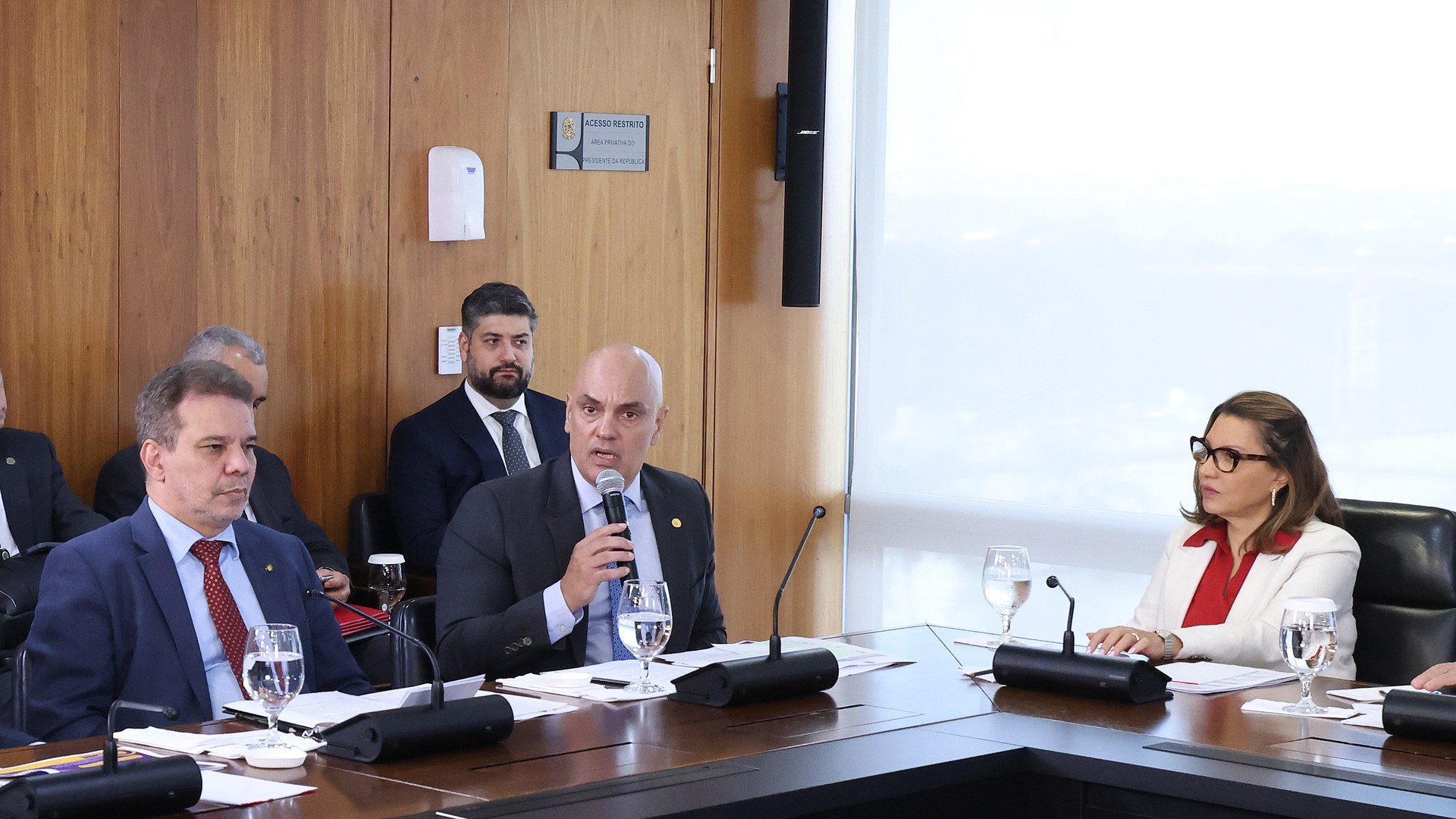

Justice Alexandre de Moraes broke the phone and online secrecy of eight people in 2022 inside the fake news inquiry. A projection shows that chain could reach a million Brazilians, and Prosecutor General Paulo Gonet wants the files kept sealed.
BRASILIA — The Supreme Court inquiry that Justice Alexandre de Moraes ran for seven years may have pulled the private data of more than a million Brazilians into its orbit, and the country will probably never be allowed to know. In December 2022 Moraes authorized the breach of phone and online records of eight people under investigation, according to Gazeta do Povo. Now that the inquiry has been closed, Prosecutor General Paulo Gonet, appointed by the Lula regime, wants everything it gathered to stay under seal.
Eight phones were opened in 2022. Every phone holds hundreds of contacts, and every contact holds hundreds more. Seven years and more than 12,000 pages later, nobody in Brasília has said how many Brazilians ended up inside the file.
The fake news inquiry was opened in March 2019 by then-Chief Justice Dias Toffoli on the court’s own initiative, with no request from prosecutors, and handed to Moraes without the random draw that normally assigns cases. According to Metrópoles, it grew to more than 12,000 pages in over 50 volumes. On Monday, Chief Justice Edson Fachin closed the inquiry, after Gonet said its object had been exhausted. Gonet also asked that the information collected remain secret.
How a case of eight becomes a case of a million
A breach of telephone and telematic secrecy does not stop at the target. It hands investigators message logs, call records and contact lists, and each name on those lists can become a new lead. A projection circulated in the Brazilian press this week shows the arithmetic: if each of the eight original targets led to ten more people, the first round reaches 80, the fourth round 88,888 and the fifth 888,888. A sixth round would pass 8.8 million. That is a model, not a count. But it explains why the size of what Moraes collected matters as much as the eight names on the original order.
Why it matters
For American readers, this is the inquiry behind the takedown orders against social media accounts, the clash with X and the cases against journalists and lawmakers that Washington has criticized for years. If the data of Brazilians who were never accused of anything sits in sealed volumes in Brasília, that is a privacy question that reaches far beyond Brazil, including Brazilians living in the United States who appeared in the contact lists of people under investigation. It is also happening in the same week that the Lula regime’s Federal Police removed the detectives whose reports named Supreme Court justices, and Moraes ordered another arrest in a case that reaches Flávio Bolsonaro’s circle.
The record
Confirmed in public records and reporting: the 2019 opening by Toffoli without a prosecutor’s request, the designation of Moraes without a draw, the December 2022 order breaking the phone and online secrecy of eight people (Gazeta do Povo, January 2023), the size of the file (Metrópoles), Gonet’s request to close the case and keep its contents secret, and Fachin’s closure order. Not confirmed: how many people’s data was actually reached. The one-million figure is a mathematical projection, and there is no public evidence that the Supreme Court or the Federal Police followed that path or reached that number. That is exactly the problem: with the file sealed, there is no way to check.
The inquiry is closed, but its secrets are not. A court that spent seven years investigating what Brazilians said online now asks Brazilians to trust that nothing it collected about them will ever be misused, while the prosecutor chosen by the Lula regime asks that no one be allowed to look. A democracy does not close an investigation of this size by locking the evidence away. The next test is whether Congress or the courts force the file open, or whether the largest surveillance record in Brazil’s recent history simply disappears into a vault.
The Watch Post Daily will continue to follow this story. Sources: Supreme Federal Court, Office of the Prosecutor General, Gazeta do Povo, Metrópoles.
Featured image: Alexandre de Moraes at the Planalto Palace, July 29, 2026, photo by Luiz Silveira/STF, via Wikimedia Commons, public domain.

COMMENTS