
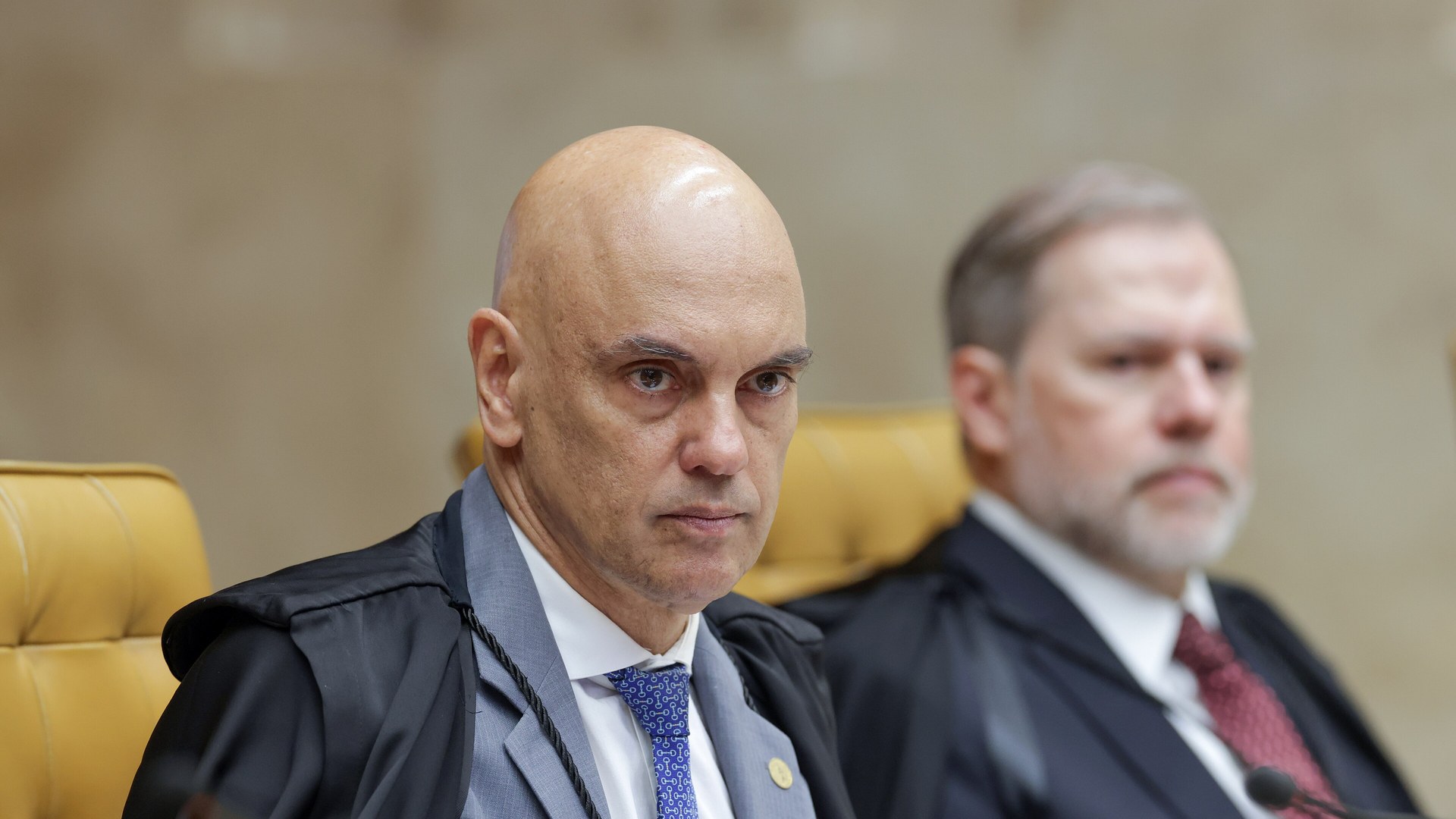

Justice Alexandre de Moraes, sanctioned by Washington in 2025 and rapporteur of the case that sent Bolsonaro to prison, presided over Brazil's Supreme Court after Chief Justice Fachin recused himself. By custom he will lead the court from 2027, while a vote on investigating him is still pending.
BRASILIA — Justice Alexandre de Moraes took the presiding chair of Brazil’s Supreme Court on Thursday, Nov. 12, after Chief Justice Edson Fachin declared himself unable to judge a case, according to the newspaper Gazeta do Povo. Fachin stepped aside because, before joining the court, he had worked as a lawyer for savers suing over losses from Brazil’s economic plans of the late 1980s and early 1990s. As vice president, Moraes ran the plenary session himself.
The case, reported by Justice Cristiano Zanin, covers the Bresser, Verão, Collor I and Collor II plans. Under Moraes, the court refused to hear three final appeals and declared the case closed. The ruling was technical. The picture was not. By the court’s custom of rotating the presidency by seniority, Fachin’s term ends in September 2027 and Moraes is next in line to lead the court until 2029, Gazeta do Povo notes. Thursday was a preview.
Who Moraes is
Moraes joined the court in 2017. He presided over Brazil’s Superior Electoral Court during the 2022 election that returned Lula to power, a result millions of Brazilians still dispute. He is the rapporteur of the coup case in which former President Jair Bolsonaro was sentenced in September 2025 to 27 years and three months in prison, and he decides the fate of the Jan. 8 political prisoners. In 2024 he ordered X shut down in Brazil for 39 days. In July 2025 the U.S. Treasury sanctioned him under the Global Magnitsky Act, accusing him of censorship, arbitrary detentions and politicized prosecutions, including of Bolsonaro. Washington lifted the sanctions in December 2025, and in March 2026 the Brazilian site Metrópoles reported, citing three sources, that Trump administration officials were discussing reimposing them.
Why it matters
The presidency of Brazil’s top court is not ceremonial. The chief justice sets the plenary agenda, deciding which cases are heard and when, and chairs the council that oversees the country’s judges. From 2027 that power would belong to the justice Washington sanctioned for censorship, in the largest democracy in the hemisphere after the United States. For American companies whose platforms answer to Brazilian courts, the name in that chair matters.
The case still waiting
On Sept. 15 the Supreme Court met to decide whether to open an investigation into Moraes over his ties to Daniel Vorcaro, owner of the collapsed Brazilian lender Banco Master. The Federal Police found about 50 messages between Vorcaro and a number attributed to Moraes. After six hours, Justice Flávio Dino asked for up to 90 days more. Nothing has been decided. Banco Master had also signed a R$129 million contract with the law firm of Moraes’s wife. The justice whose possible investigation sits on a colleague’s desk spent Thursday in the president’s chair.
The record
Confirmed: Fachin’s recusal and its reason, Moraes presiding over the Nov. 12 session, Bolsonaro’s conviction with Moraes as rapporteur, the Magnitsky sanctions and their removal, and Dino’s request for more time on Sept. 15. Not settled: the 2027 presidency itself, since the justices elect their president and seniority is custom, not law. Reported but unconfirmed: talks in Washington about new sanctions, attributed to unnamed sources. Moraes has denied a relationship with Vorcaro, according to Veja.
A court that cannot decide whether to investigate its vice president already knows who will lead it next. Thursday showed the order of things in Brasília: the questions about Moraes wait, and Moraes presides. The justice who ran the 2022 election, sent Bolsonaro to prison and was sanctioned by Washington is ten months from running the whole court, while the decision on investigating him waits.
The Watch Post Daily will continue to follow this story. Sources: Gazeta do Povo (Nov. 13, 2026), O Povo and Times Brasil (Sept. 2026), Metrópoles via Revista Oeste (March 2026), U.S. Treasury Department (July 2025).
Featured image: Sessão plenária do STF – 2026 02 12 by Rosinei Coutinho/STF, via Wikimedia Commons, free to reuse with attribution.

COMMENTS