

Allies of the Jan. 8 convicts met at the PL’s Brasília headquarters to plan a Supreme Court suit to defend the Dosimetry Law and a possible complaint against the Brazilian State at the OAS human rights commission, according to Metrópoles.
BRASILIA — Allies of those convicted over the Jan. 8, 2023 riots met at the headquarters of the Liberal Party (PL) in the Federal District on Tuesday, Nov. 10, to plan a legal and international campaign, including a possible complaint against the Brazilian State at the Inter-American Commission on Human Rights (IACHR), the body of the Organization of American States (OAS) that hears such petitions, according to Metrópoles columnist Neila Guimarães. The meeting brought together lawyers, jurists and parliamentary aides, and Brasil no Centro and Diário do Centro do Mundo followed up on the report.
The PL is the party of the Bolsonaro family, and the Jan. 8 convicts are at the center of its agenda. The group’s first priority is to get the Dosimetry Law, Law 15.402/2026, applied. Congress promulgated it on May 8 after overriding President Lula’s veto, and Justice Alexandre de Moraes suspended its application to Jan. 8 execution cases the next day, until the full Supreme Court rules on the challenges filed by the Brazilian Press Association (ABI), the PSOL-Rede federation, the PDT and the PT-PCdoB-PV federation. The Chamber and the Senate told the court the law is valid.
Why it matters
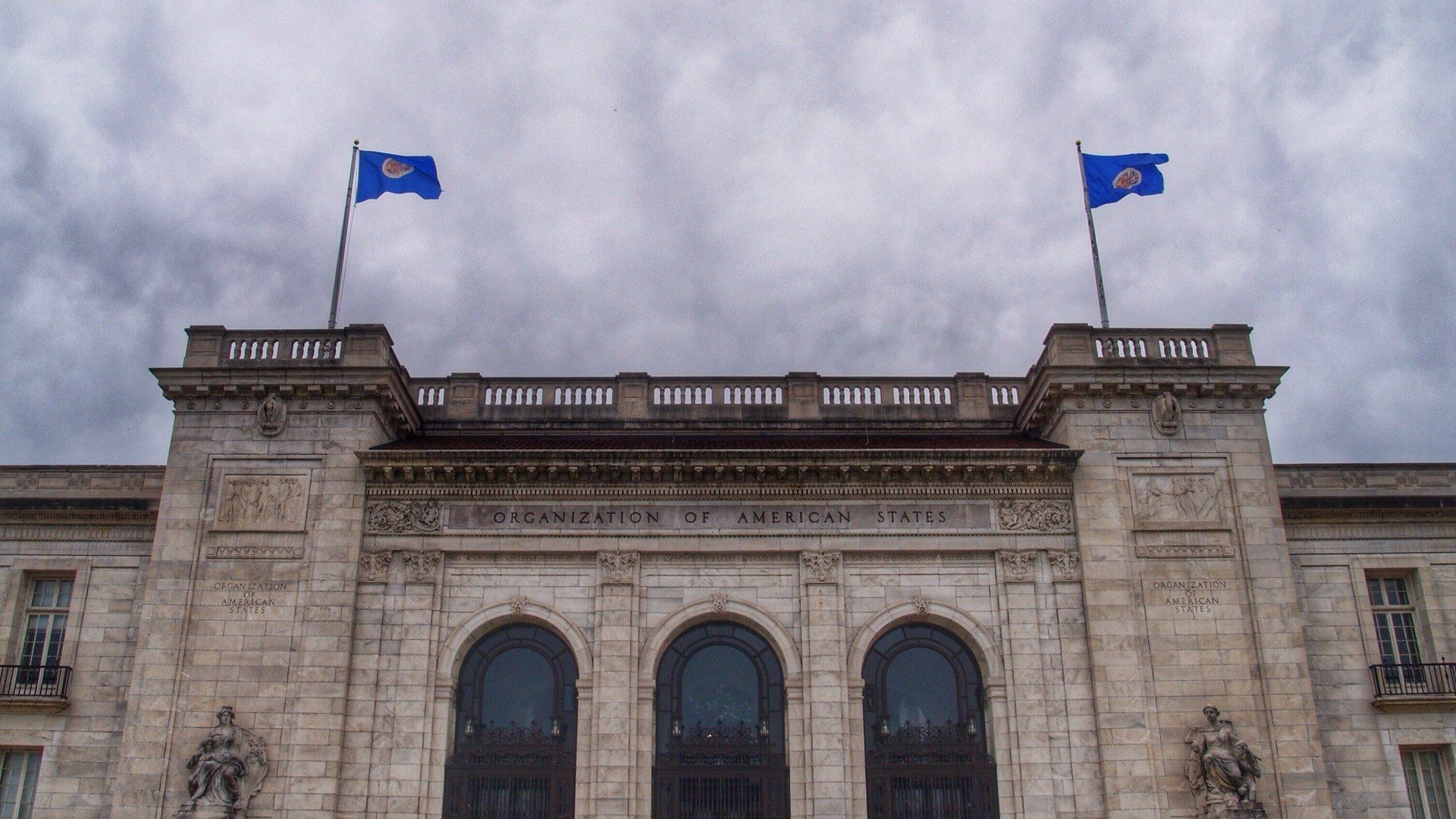
The OAS is headquartered in Washington, and so is the Commission. A Brazilian opposition party that takes its prisoners there is asking an institution on American soil to look at what the Brazilian Judiciary has done. For U.S. readers, that is a clear sign of how far the dispute has moved beyond Brasília, and of how the opposition reads its domestic options.
What the plan includes
At home, the group is drafting a Declaratory Action of Constitutionality (ADC) asking the Supreme Court to recognize that the Dosimetry Law is valid. The draft is to go to the PL’s legal department before any formal filing, and as of the report it had not been filed. Participants also discussed a collective habeas corpus and a collective writ of mandamus, and they acknowledge those routes may face obstacles over whether they are admissible. The argument leans on the constitutional principle that a more favorable criminal law applies retroactively, in Article 5 of the Constitution, and on Article 9 of the American Convention on Human Rights, which calls for the lighter penalty when a later law benefits the convict.
Abroad, the proposal is to ask the IACHR for precautionary measures and to file a complaint against the Brazilian State alleging violations of the Convention, seeking accountability, reparation and guarantees of non-repetition. The group also wants to train lawyers to work in the inter-American system and to follow the 2027 selection of commissioners and judges of the Inter-American Court. The plan reaches beyond the courts: a book fair open to the public in front of the National Museum in Brasília, a collective book launch at the Senate library (which would require a request to use it), and a book of testimonies from convicted women. In the Chamber, the organizers want support for an institutional commission to monitor the cases from a human rights angle, with visits and reports. The party is also pressing on the Senate front, where Rogério Marinho has vowed not to sit on impeachment requests against Supreme Court justices.
The record
Confirmed: the Nov. 10 meeting at the PL headquarters, as reported by Metrópoles; the May 8 promulgation of the law; and Moraes’s suspension of it in Jan. 8 execution cases. Not yet done: no ADC had been filed, and the reports stress that none of these initiatives is a formal decision by Congress or by the international bodies named. The caveats come from the same coverage: a petition is not automatically accepted, the Commission applies its own admissibility rules, including prior use of domestic remedies, and the inter-American system does not work as an automatic appeals court for Supreme Court convictions. The claims of rights violations are the convicts’ allies’ allegations.
When the domestic path is blocked by one justice’s order, the only places left to knock are abroad, and that is what this meeting amounts to. It is a slow route, and the Commission is not going to overturn a conviction. But it moves a Brazilian political fight into a forum in Washington, and it will test whether the Lula regime treats outside scrutiny of its Judiciary as something to answer or to ignore. The next signal is whether the ADC is filed at the Supreme Court, and whether the petition to the Commission ever leaves the draft stage.
The Watch Post Daily will continue to follow this story. Sources: Metrópoles (Neila Guimarães), Brasil no Centro and Diário do Centro do Mundo.
Featured image: Pan American Union Building, Organization of American States (2014) by Michael Scialdone, via Wikimedia Commons, CC BY 2.0.

COMMENTS