

Alexandre de Moraes lifted the ankle monitor of a Jan. 8 defendant after three years, while the same ruling cycle sent a federal appeals judge home with one after about ten months and moved Rodrigo Bacellar to a state prison near Rio, Infoverus, Olhar Direto and Veja reported.
BRASILIA — Supreme Federal Court Justice Alexandre de Moraes revoked the ankle monitor and the nighttime curfew of a woman charged over the Jan. 8, 2023 riots, after three years under both measures, Brazilian outlets Infoverus and Olhar Direto reported. The decision came on the back of a justification about equipment failure. In the same stretch, Veja reported, Moraes authorized the transfer of former Rio state assembly speaker Rodrigo Bacellar out of a federal penitentiary, and freed a federal appeals judge from jail in the same case.
The two decisions belong to one docket logic. Bacellar, who presided over the Rio legislature, has been jailed since March under Operation Unha e Carne, a Federal Police investigation into the alleged leak of details of an operation against former state lawmaker TH Joias, who is suspected of ties to the Comando Vermelho gang. According to Veja, he was moved before dawn on Tuesday, Nov. 10, from the federal penitentiary in Mossoró, in Rio Grande do Norte, to a state facility in Niterói where sex offenders and elderly inmates serve time. He had been in federal custody since July over suspicions that he kept using cell phones in jail and kept influence over Rio officials. Moraes signed the transfer on Oct. 30.
That same Oct. 30 decision released federal appeals judge Macário Ramos Júdice Neto, held since Dec. 16, 2025 on suspicion of tipping Bacellar off about the operation. Moraes swapped his detention for an ankle monitor and the seizure of his passport. His lawyers deny the accusations and say phone-tower data show he and Bacellar were not together at the barbecue restaurant where investigators place a September 2025 meeting. Bacellar, Júdice and TH Joias are all defendants.
Why it matters
For American readers, the point is not any single name. It is that one justice decides, alone and without a visible standard, how long a citizen wears a device on the ankle. A federal appeals judge accused of leaking a police operation involving a gang-linked suspect leaves jail after roughly ten and a half months. A Jan. 8 defendant carries the same device for three years, and gets it off only after a technical justification. Critics of the court have long described the Jan. 8 prosecutions as political persecution; Brazil’s own Chief Justice, Edson Fachin, defended them, even as 104 offshoots of the fake news inquiry survive.
The pattern
The measure is the same. The duration is not. Earlier this year, NC News reported that Moraes lifted the monitors of 49 Jan. 8 defendants in a single order, and Revista Oeste counted at least 19 in an earlier one, in several cases noting the defendants had complied for about three years. Each of those decisions arrived on the justice’s own timing, with no rule the public can read in advance. The same justice, as the record shows, ran a secret data dragnet that may have reached a million Brazilians and ordered an arrest in a leak case that reaches Flávio Bolsonaro’s circle. A court that is investigator, judge and release valve at once is the kind of institutional capture Americans recognize from other republics, and it happens under a regime whose 2022 victory millions of Brazilians still dispute.
The closing question is the simple one. If three years of monitoring was necessary, why does it end on a technicality, and if it was not, who answers for the three years? Nobody outside Moraes’s chambers can say when the next device comes off, or on whom the next one goes.
The record
What is confirmed: Bacellar was transferred to Niterói on Nov. 10 on an Oct. 30 order, and Júdice was released with an ankle monitor and passport seizure, per Veja and Gazeta do Povo. The lifting of the Jan. 8 defendant’s monitor after three years is reported by Infoverus and Olhar Direto; her name was not given in the coverage we could access. What remains an allegation: the leak itself, which Júdice denies, and the characterization of the Jan. 8 prosecutions as political persecution, which is the position of the court’s critics, not a finding of any court.
The Watch Post Daily will continue to follow this story. Sources: Veja, Gazeta do Povo, Infoverus, Olhar Direto, NC News, Revista Oeste.
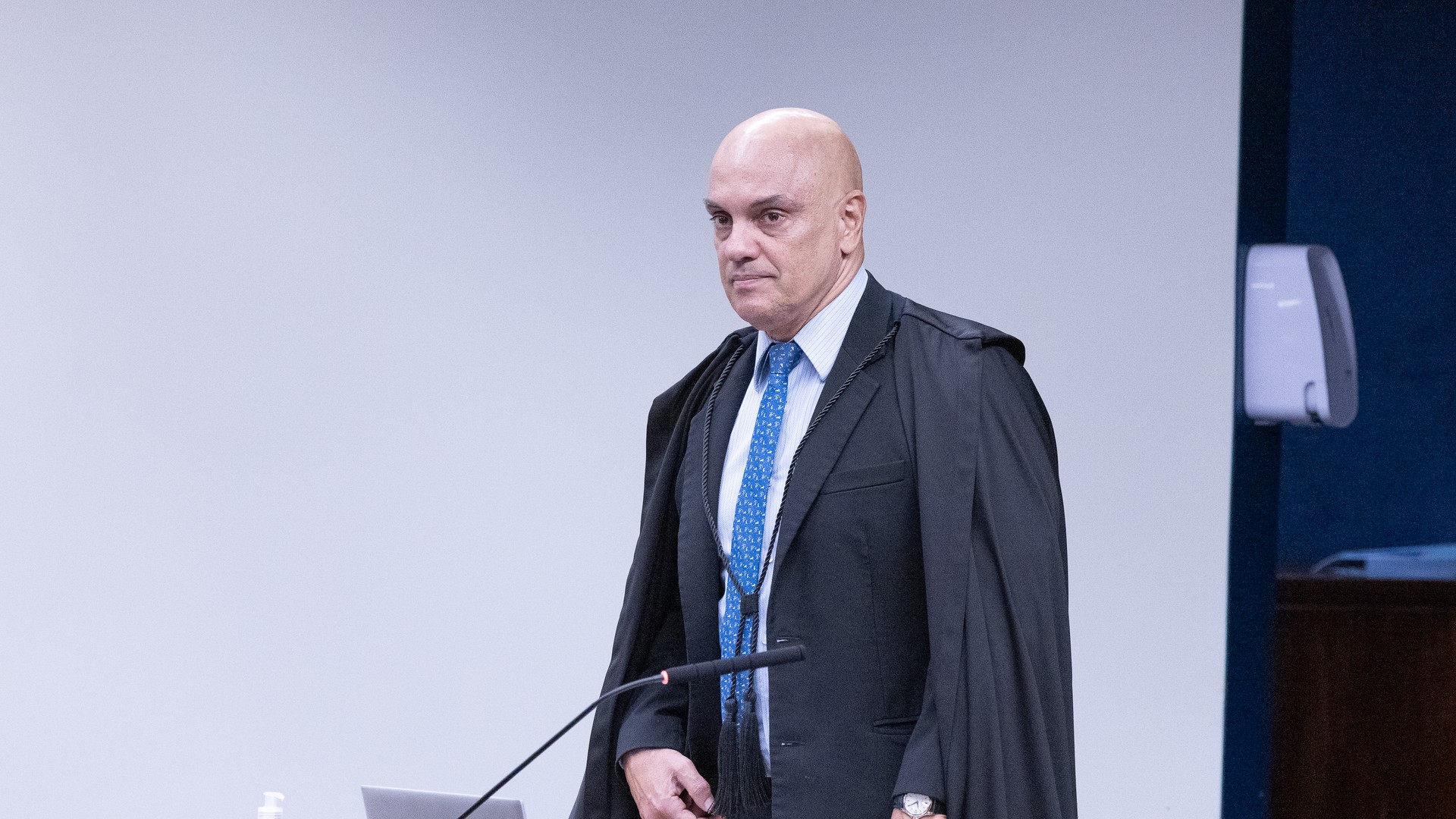
Featured image: Sessão da Primeira Turma do STF – 30/06/2026 by Supremo Tribunal Federal, via Wikimedia Commons, public domain.

COMMENTS