
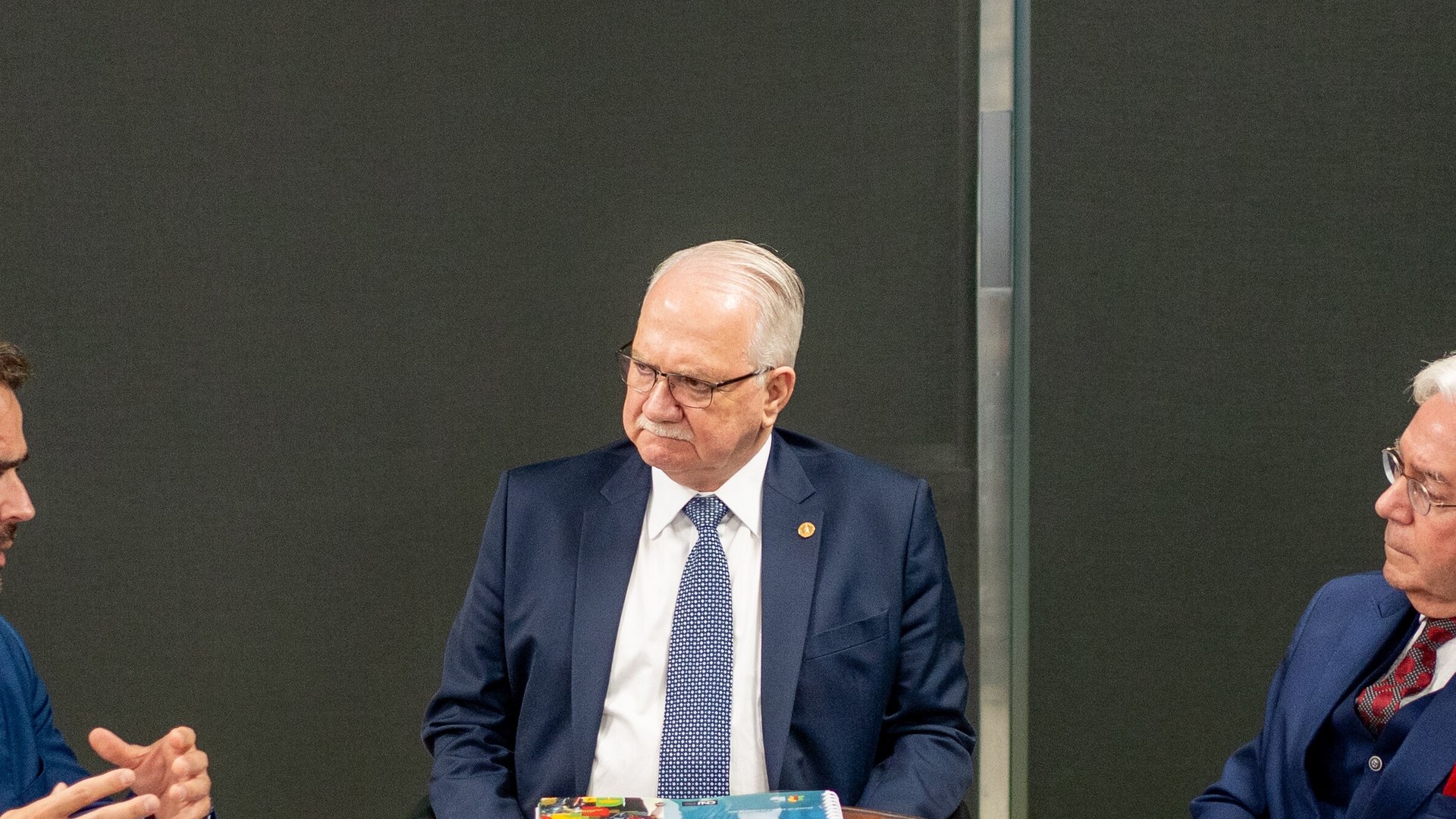

Chief Justice Edson Fachin closed the Supreme Court’s fake news inquiry after more than seven years, following a request from the prosecutor general. The bar association said it ran without basis in law. But 104 related cases are still under review and past convictions stand.
BRASILIA — Brazil’s Chief Justice Edson Fachin on Monday closed the Supreme Court’s fake news inquiry, the investigation opened in March 2019 that for more than seven years let Justice Alexandre de Moraes investigate, censor and order arrests of the court’s critics. Fachin acted after Prosecutor General Paulo Gonet said “the object of the investigations has been exhausted,” as reported by Gazeta do Povo. “There is no basis for an investigation to remain open indefinitely,” Fachin wrote.
The inquiry was unusual from its first day. It was opened by then-Chief Justice Dias Toffoli on the court’s own initiative, without a request from prosecutors, and handed to Moraes by direct designation rather than the random draw that normally assigns cases. In 2019 the prosecutor general at the time, Raquel Dodge, asked for it to be shut down. Moraes refused. It went on to fill 57 physical volumes and more than 1,300 electronic documents, according to Gazeta do Povo. In September, Fachin removed Moraes as rapporteur and moved the file to the court’s presidency.
Why it matters
For American readers, this inquiry is the root of most of what Washington has criticized in Brazil: the orders to take down social media accounts, the clash with X, the cases against journalists and lawmakers, and the climate in which questioning the 2022 election became a legal risk. Brazil’s bar association, the OAB, said through its president Beto Simonetti that the investigation ran “without support in law or in the Constitution,” and called Fachin’s decision correct.
Opposition lawmakers welcomed the end and asked who will answer for what came before. Deputy Sóstenes Cavalcante (PL) called it “a necessary step to restore legal certainty to the country.” Deputy Lucas Pavanato said it was “Moraes’s main instrument to persecute his opponents.” Deputy Gil Diniz demanded that the contents be made public, calling the inquiry “illegal from the start.”
What does not end
The closure is narrower than the headline suggests. According to Revista Oeste and Gazeta do Povo, 104 procedures that grew out of the main inquiry will each be reviewed separately, and the closure does not automatically end them. Convictions already handed down are not reversed. In a separate decision, Fachin also shelved a 2023 request by Flávio Dino, then justice minister and now a Supreme Court justice, to add former Lava Jato prosecutor Deltan Dallagnol to the inquiry over comments about Dino’s visit to Rio’s Complexo da Maré.
The record
Confirmed: the closure order, Gonet’s request, the 2019 opening by Toffoli, the designation of Moraes without a draw, the Dodge request and Moraes’s refusal, and the shelving of the Dino request, all in public court records and reported by Gazeta do Povo, Revista Oeste, InfoMoney and CartaCapital. Still open: the 104 offshoot cases and whether anyone convicted under the inquiry will get a new hearing.
The symbol of judicial censorship in Brazil is gone, but its heirs are not. The court closed the file without admitting that it should never have been opened, and the people punished under it are still punished. Until the 104 cases are resolved and the convictions are reviewed, Brazil has changed the label on the door, not what happens behind it.
The Watch Post Daily will continue to follow this story. Sources: Supreme Federal Court, Office of the Prosecutor General, OAB, Gazeta do Povo, Revista Oeste, InfoMoney, CartaCapital.
Featured image: 11.03.2026 – Audiência com presidente do STF, ministro Edson Fachin – 55141874917 by Governo RS, via Wikimedia Commons, CC BY-SA 4.0.

COMMENTS