

Brazil's Senate approved the Public Security amendment on Nov. 3 without a single vote against, writing federal guidelines for the state police into the Constitution. Attorney Carlos Fernando Maggiolo warns the Lula regime now holds the courts and the police.
BRASILIA — Brazil’s Senate approved a constitutional amendment on Nov. 3 that a prominent criminal-law attorney says hands the Lula regime a lever over the state police forces that governors have controlled since 1988. The vote was 73 in the first round and 75 in the second, with no votes against, and the text now goes to promulgation, clearing the way for a federal Ministry of Public Security.
The Public Security PEC (PEC 18/2025) was sent to Congress by the Lula government in April 2025 and passed the Chamber of Deputies on March 4, 2026, by 461 votes to 14. Senator Rogério Carvalho (PT-SE) was the rapporteur. The text writes the Unified Public Security System (SUSP) into the Constitution, sets federal guidelines for cooperation among police forces, expands the Federal Police’s reach over interstate and international crimes, and lets cities create their own police forces. On Nov. 4, criminal defense lawyer and law professor Carlos Fernando Maggiolo published an analysis headlined “Another coup: They Venezuelized public security.” The Watch Post Daily raises his argument here as an international alert.
Why it matters
Brazil is the largest democracy in Latin America and a partner of Washington on organized crime, extradition and drug interdiction. Whoever controls the police decides who is investigated, who is stopped and who is protected, and that is the difference between a federal republic and a centralized state.
The core of the criticism
Maggiolo separates integrating police forces from centralizing them. Article 144 of the Constitution places the state police under their governors, and he argues the amendment widens Brasilia’s normative reach through “general guidelines.” In his reading, command stays formally with the states, but if the federal government decides police may no longer use rifles in operations in poor neighborhoods, “the governors will have to comply.”
He then draws the comparison the headline promises. In Venezuela under Nicolás Maduro, he writes, public security is carried out by the “colectivos,” which he describes as nothing more than local criminal gangs. His conclusion: “Lula already had the Supreme Court in hand. Now he has the state police too. This is how a dictatorship is installed.” He adds that the PCC, Brazil’s largest criminal faction, “spared no effort” to see the amendment approved.
The pattern is one this newspaper has documented. A government whose 2022 victory millions of Brazilians dispute, alleging electronic ballot fraud, already counts on a Supreme Court that jails citizens over Jan. 8 and has cleared a U.S.-sanctioned Venezuelan general to serve inside Brasilia. Courts first, then the police: the sequence is familiar to anyone who has watched other Latin American republics narrow.
The record
Confirmed by Senate and Chamber records: the dates, vote counts, rapporteur and contents above. Also confirmed, and cutting against the simple version of the story: opposition parties did not block the text, and no senator voted against it. Opposition leader Rogério Marinho (PL-RN) pushed amendments to lower the age of criminal responsibility, which were split off by 38 votes to 36 and remain pending. The text also contains measures its supporters call tough on crime, including maximum-security prison for faction members and limits on sentence progression.
Alleged, not established: Maggiolo’s claim that federal guidelines could bar rifle use is his interpretation, and published summaries of the text do not mention rifles. His statement that the PCC lobbied for the amendment is an assertion the Watch Post Daily has not independently verified. The amendment also spent more than a year and a half in Congress, which complicates the claim of haste.
What the record does show is authority moving toward Brasilia, approved almost without resistance, in a country where the Judiciary already answers to the same political camp. The test comes next: the first federal guideline issued under the new article, and whether a governor can refuse it. The new Ministry of Public Security is the predictable next step, and the American reader should watch who is named to run it.
The Watch Post Daily will continue to follow this story. Sources: Agência Senado, CartaCapital, Congresso em Foco, and an analysis by criminal-law attorney Carlos Fernando Maggiolo.
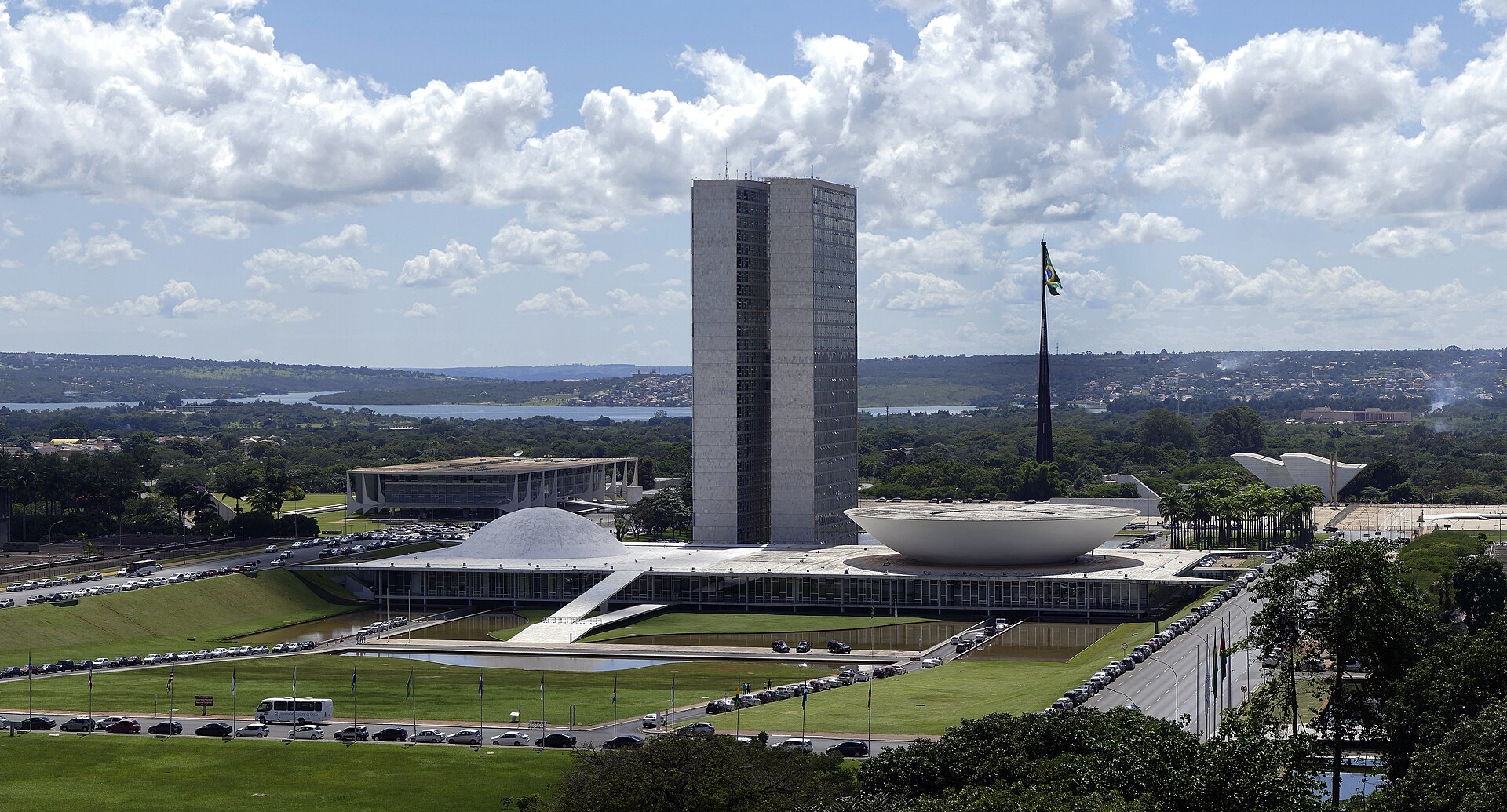
Featured image: Imagens de Brasília – Congresso Nacional by Roque de Sá/Agência Senado, via Wikimedia Commons, CC BY 2.0.

COMMENTS