
At the ASEAN Summit in the Philippines, Lula said big tech cannot override the sovereignty of states. At home, his regime is three days from a House vote that lets a government agency set special rules for platforms, after years of bans, takedowns and a seven-year censorship inquiry.
MANILA — Standing before the leaders of Southeast Asia on Saturday, Nov. 14, at the 49th ASEAN Summit in the Philippines, President Luiz Inácio Lula da Silva warned that “the excessive concentration of technological power represents a growing threat to our societies” and declared that “the designs of the big technology companies cannot override the sovereignty of states and the rights of citizens.” The words, taken from the official transcript of the speech, were aimed at foreign platforms. The audience was the world. The target, at home, is the freedom of Brazilians to speak online without the state deciding what stays up.
The speech came three days before Brazil’s House of Representatives is scheduled to vote, on Tuesday, Nov. 17, on the Lula regime’s bill PL 4.675/2025, which creates a digital markets office inside CADE, the country’s antitrust agency, and lets it impose special obligations, case by case, on platforms it labels of “systemic relevance.” As we reported on Saturday, the companies the bill is built to reach are, for the most part, American.
A pattern, not a speech
Lula’s “sovereignty” language is not new, and in Brazil it has a record. In August 2024, Justice Alexandre de Moraes ordered X taken offline nationwide; the platform came back only after paying millions of reais in fines and naming a legal representative. In February 2025, Moraes suspended Rumble. In June 2025, the Supreme Court rewrote Article 19 of Brazil’s internet law, the Marco Civil, so that platforms can be held liable for what users post even without a court order, a change that pushes companies to delete first and ask later. And the so-called fake news inquiry, under which police were sent after conservative influencers, ran for seven years before it was closed on Nov. 9.
Each step was sold as protection: of democracy, of children, of national sovereignty. Each one widened the power of the state, or of a court aligned with it, over what Brazilians can read and say. The CADE bill speaks the language of competition, not content. Its critics, including the Latin American Internet Association, warn that its key terms are vague enough to let a government agency choose which platforms must obey special rules and how.
Why it matters to Americans
Washington has already drawn the line. In July 2025 the U.S. Treasury sanctioned Justice Moraes under the Global Magnitsky Act, citing censorship and arbitrary detention, and the State Department restricted visas for officials tied to the crackdown. The U.S. Trade Representative has listed PL 4.675 as a trade barrier. When Lula takes his case to Asia, under the banner of the “Global South,” he is not debating Washington. He is recruiting allies against it, and offering Brazil’s model of speech control as an export.
That model now reaches beyond Brazil’s borders. American companies, and the Americans who use their platforms, are the ones asked to comply.
The record
The quotes come from the official transcript of the speech. The X and Rumble suspensions, the Supreme Court’s Article 19 ruling, the U.S. sanctions and the Nov. 17 vote are matters of public record. Whether the CADE bill will be used to shape content, as its critics fear, or only markets, as the regime and the bill’s rapporteur insist, is not yet settled. The regime’s track record is the reason to doubt the promise.
This is a government whose 2022 victory remains disputed by millions of Brazilians who allege electronic ballot fraud, and which now asks the world to trust it with the power to decide which platforms, and which voices, operate in the country. A president who speaks of citizens’ rights in Manila while his allies fast-track state control of the internet in Brasília is not defending those rights. He is rewriting them. Congress should hold public hearings before Tuesday, and Washington should be listening.
The Watch Post Daily will continue to follow this story. Sources: official transcript of President Lula’s speech at the 49th ASEAN Summit; Brazil’s House of Representatives; Brazil’s Supreme Court; U.S. Department of the Treasury; Office of the U.S. Trade Representative; Latin American Internet Association (ALAI).
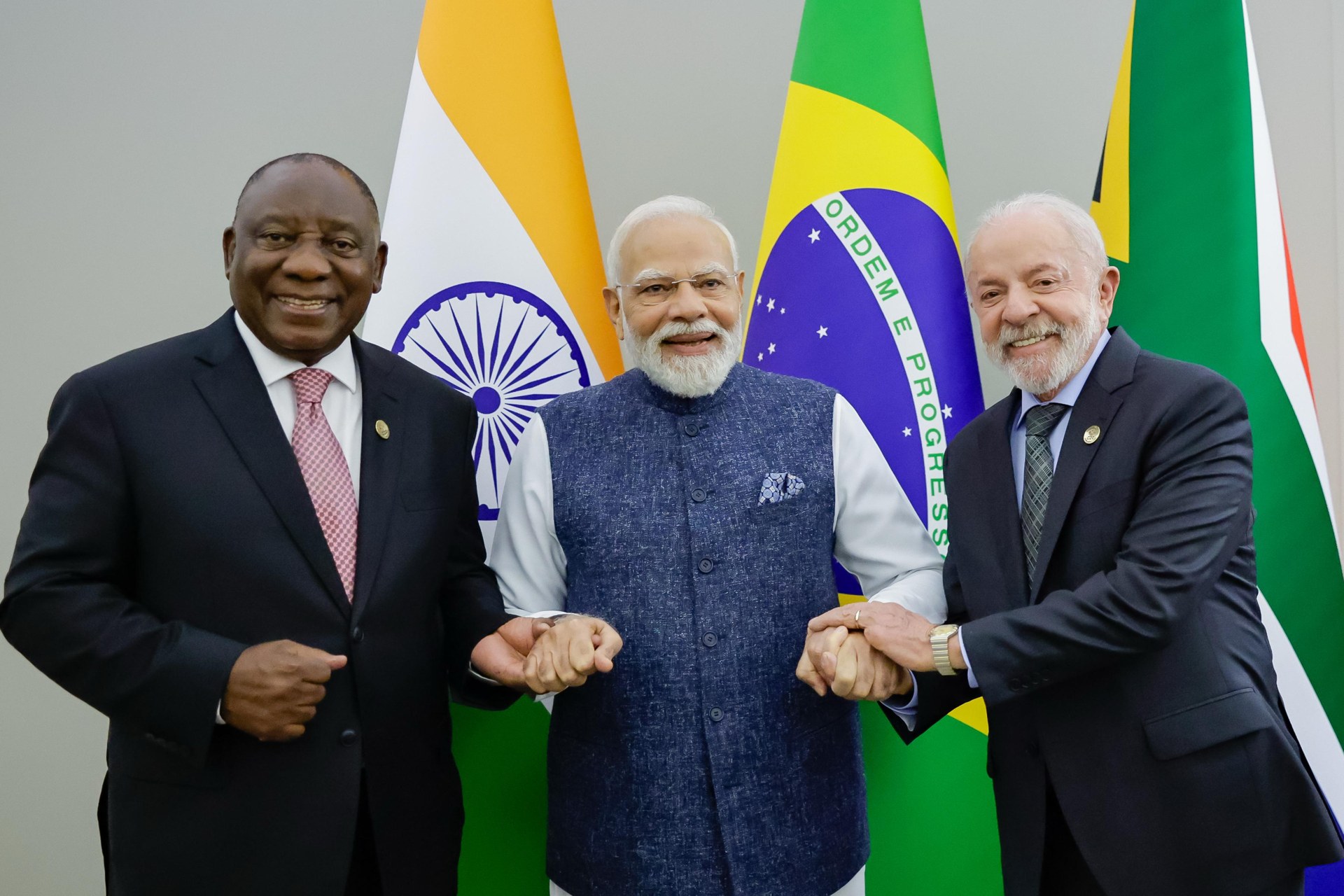
Featured image: Lula with Narendra Modi and Cyril Ramaphosa at the IBSA Summit, Johannesburg, Nov. 2025 by Ricardo Stuckert/PR (Lula Oficial), via Wikimedia Commons, CC BY-SA 4.0.

COMMENTS