

Justice Alexandre de Moraes ordered the arrest of a 24-year-old sentenced to 14 years over the Jan. 8, 2023 protest, and of a man who filmed videos of it, according to Revista Oeste, Metrópoles and Cláudio Dantas. Nearly four years on, the heavy sentences keep coming.
BRASILIA — Supreme Court Justice Alexandre de Moraes has ordered more prisoners jailed over the protest of Jan. 8, 2023, nearly four years after the day, according to Brazilian outlets including Metrópoles, Revista Oeste and the news site of columnist Cláudio Dantas. One is a 24-year-old man from the Federal District sentenced to 14 years in prison. The other is a man who recorded videos of the events.
The younger man is named in the reports as Gabriell Harthuro Santos de Holanda. Moraes ordered his arrest on Friday, Nov. 13, to start serving the 14-year sentence, the reports say. Brazilian press describes the second order as the arrest of a man who filmed videos of the storming of the Supreme Court building.
Who the Jan. 8 prisoners are
On Jan. 8, 2023, supporters of former President Jair Bolsonaro entered the Congress, the presidential palace and the Supreme Court in Brasília a week after Luiz Inácio Lula da Silva took office. The Court has since sentenced hundreds of people, many of them ordinary protesters, to prison terms of up to 17 years. This newspaper calls them political prisoners. As of November, Chief Justice Edson Fachin defended the trials and counted 431 convicts still in prison. We also covered the death of another Jan. 8 political prisoner.
Why it matters
An American reader should look at the arithmetic. A man who was about 20 when the protest happened is being sent to prison at 24 for 14 years, in a case decided by the same Court that was the target of the protest, whose justices critics say are in effect judging their own cause. There is no appeal to any higher body. The same pattern shows in other stories we followed, such as who guards and who may visit Bolsonaro, where the justice decides every detail alone. This happens under a government whose 2022 victory remains disputed by millions of Brazilians who allege electronic ballot fraud.
Smaller outlets also reported other Moraes decisions in the same days: that he backed off from keeping a convict jailed over a fine the man could not pay, that he kept a fugitive defendant’s status in place, and that he approved the dismissal of an inspector in the city of Americana. We have not confirmed those items with primary documents.
The record
What is confirmed by the reports we reviewed: the arrest order of Nov. 13 for the 24-year-old and the 14-year sentence. What is reported but not confirmed with court documents: the details of the second arrest and the three other decisions. The Supreme Court did not publish the orders in full at the time of writing, and the lawyers of those arrested have not been quoted in the reports we saw.
The pattern is the story. Nearly four years after one afternoon, the Brazilian state is still looking for people who were there, filming, walking, or standing in the crowd, and is sending them to prison for terms that critics compare unfavorably with sentences for violent crime. Whatever one thinks of the protest, a country that treats a video as grounds for an arrest order in 2026 has a problem with proportion, and the Court that decides is the only one that can fix it.
The Watch Post Daily will continue to follow this story. Sources: Metrópoles, Revista Oeste, Cláudio Dantas, DiviNews.
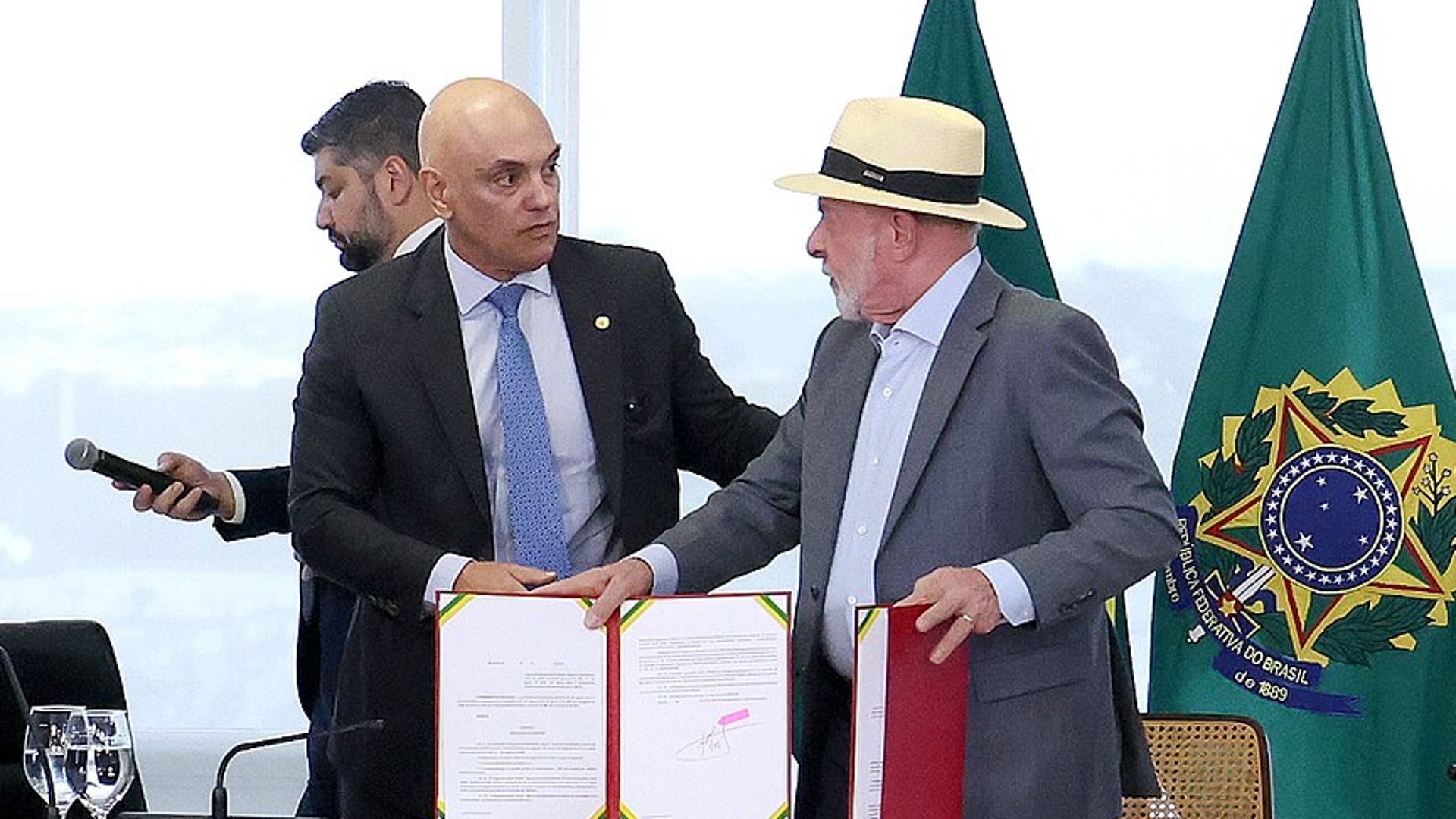
Featured image: Alexandre de Moraes at an official ceremony by Supremo Tribunal Federal (STF), via Wikimedia Commons, public domain.

COMMENTS