

Brazil's Superior Electoral Court has opened an investigation into 35 measures the Lula regime rolled out before the 2026 vote, but Estadão argues the case points to a 'certainty of impunity,' since the court has never removed a presidential ticket for abuse of power.
BRASILIA — The case against the Lula-Alckmin ticket at Brazil’s Superior Electoral Court (TSE) is heading toward the same place every similar case has gone before: nowhere. That is the verdict of O Estado de S. Paulo, one of Brazil’s oldest and most establishment newspapers, which argued in an editorial published Saturday, Nov. 7, that the TSE has never once removed a presidential ticket for abuse of political or economic power, and that the history of the court points to a “certainty of impunity.”
Thirty-five government measures in ten months, a reelection won, and a court that has never punished a sitting president’s ticket. The question in Brasília is not whether the evidence will be weighed, but whether anyone expects it to matter.
The action was filed by the Novo party, which accuses Lula of rolling out 35 government measures between January and October 2026 to boost his reelection campaign. The list includes increases to Bolsa Família, the federal cash-transfer program, cuts on fuel, and new benefits aimed at app drivers and truckers, groups the ruling party courted heavily during the race. Electoral Inspector General Ricardo Villas Bôas Cueva accepted the complaint and opened an Electoral Judicial Investigation (AIJE), the formal procedure that can, in theory, strip a ticket of its mandate. No ruling has been issued.
Why it matters
Brazil is the largest democracy in Latin America and a key partner of the United States on trade, migration and regional security. When an incumbent can use the federal budget as a campaign tool and the electoral court treats it as routine, the result is not a competitive election but a managed one. American investors, diplomats and the hundreds of thousands of Brazilians living in the U.S. have a direct stake in whether Brazil’s institutions still check the man in power, or simply wait him out.
A court built to wait
The Estadão editorial points to the most famous precedent. The Dilma Rousseff and Michel Temer ticket of 2014 was only judged almost three years after the election, when Rousseff had already been impeached and Temer was sitting in the presidency. The ticket was cleared by a 4-3 vote. “In the very remote hypothesis that they are punished, everything indicates it will happen when the next term has already ended,” the paper wrote of Lula and Alckmin. Its central charge is blunt: “The slowness of the TSE, when not its leniency, encourages abuse.”
The editorial stops short of naming the deeper problem, but the record does not. The TSE is staffed in part by justices of the Supreme Federal Court (STF), and Lula has used his years in office to place his own former personal lawyer, Cristiano Zanin, and his former justice minister, Flávio Dino, on that court. The same institutions that are now asked to judge the Lula regime’s conduct in the 2026 race are institutions the regime has spent years shaping. This happens under a government whose 2022 victory remains disputed by millions of Brazilians who allege electronic ballot fraud, and who have watched the electoral court move with speed against opponents of the ruling party while moving with patience toward its allies.
The record
What is documented: the Novo party’s complaint, the list of 35 measures it cites, the decision by Villas Bôas Cueva to open the AIJE, and the TSE’s history, which includes no case of a presidential ticket removed for abuse of power. The 2017 acquittal of the Dilma-Temer ticket is a matter of public record. What remains an allegation is the claim at the heart of the case, that the 35 measures were designed to buy votes rather than to govern. That is what the investigation is supposed to determine.
The problem is that almost no one in Brasília believes it will. A ruling, if it comes, is likely to arrive after the next term is over, when removing a ticket no longer changes anything. That is the real message to every future incumbent: spend freely before the vote, win, and let the court take its time. As Estadão put it, what is unacceptable is the TSE continuing to signal “to incumbents that abuse pays off.” Under the Lula regime, the electoral court looks less like a referee than like part of the stage.
The Watch Post Daily will continue to follow this story. Sources: O Estado de S. Paulo editorial of Nov. 7, 2026; Superior Electoral Court (TSE); Novo party complaint.
Related coverage: Lula regime books a national broadcast while the Treasury does not accept speeches as payment, Banker’s phone logged 316 contacts with Justice Moraes before his arrest and Lula says no one will invest in a disordered economy.
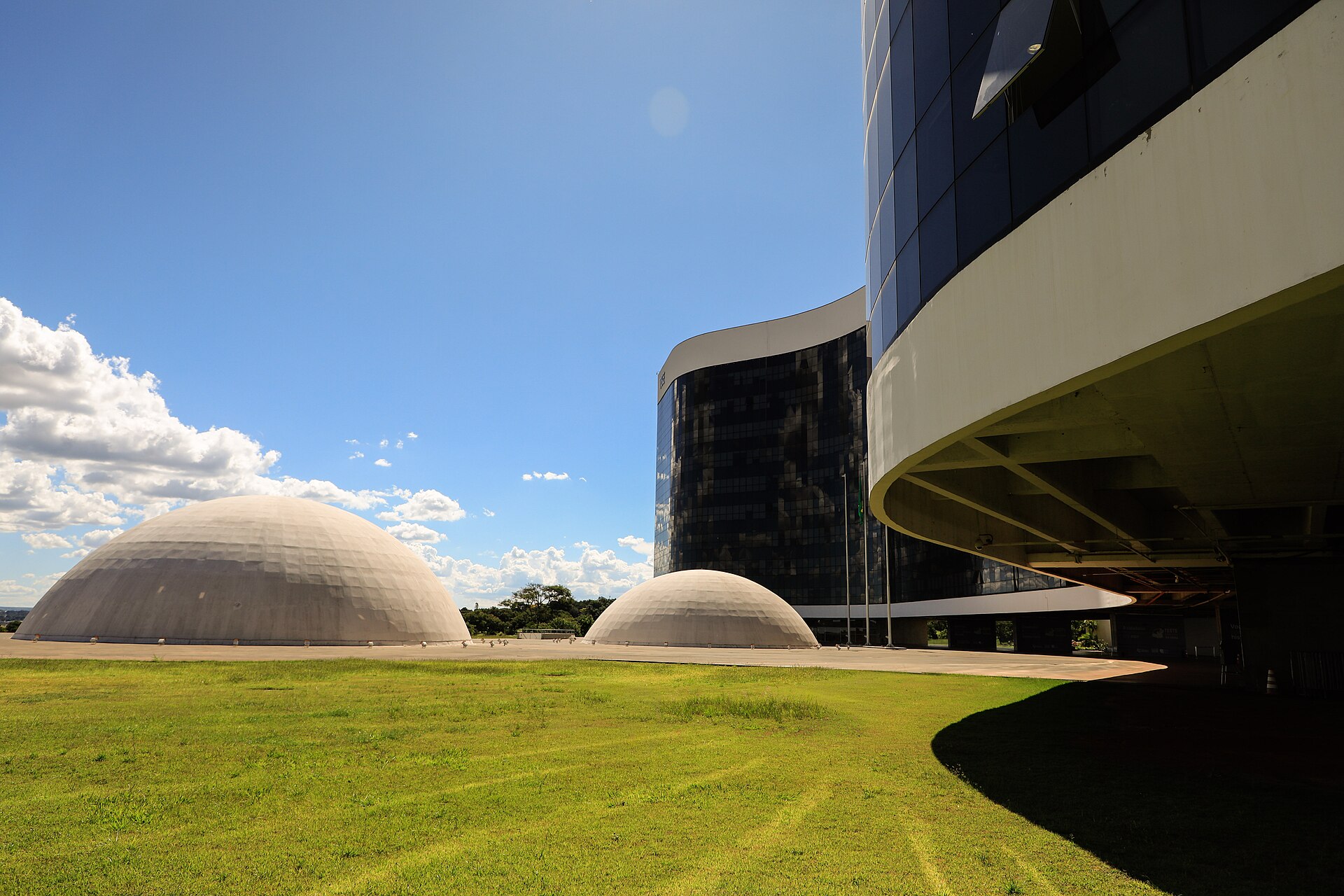
Featured image: 2025-12-26 Fotografia da sede do TSE em Brasília – DF – 06 by O Tribunal da Democracia, via Wikimedia Commons, public domain.

COMMENTS