
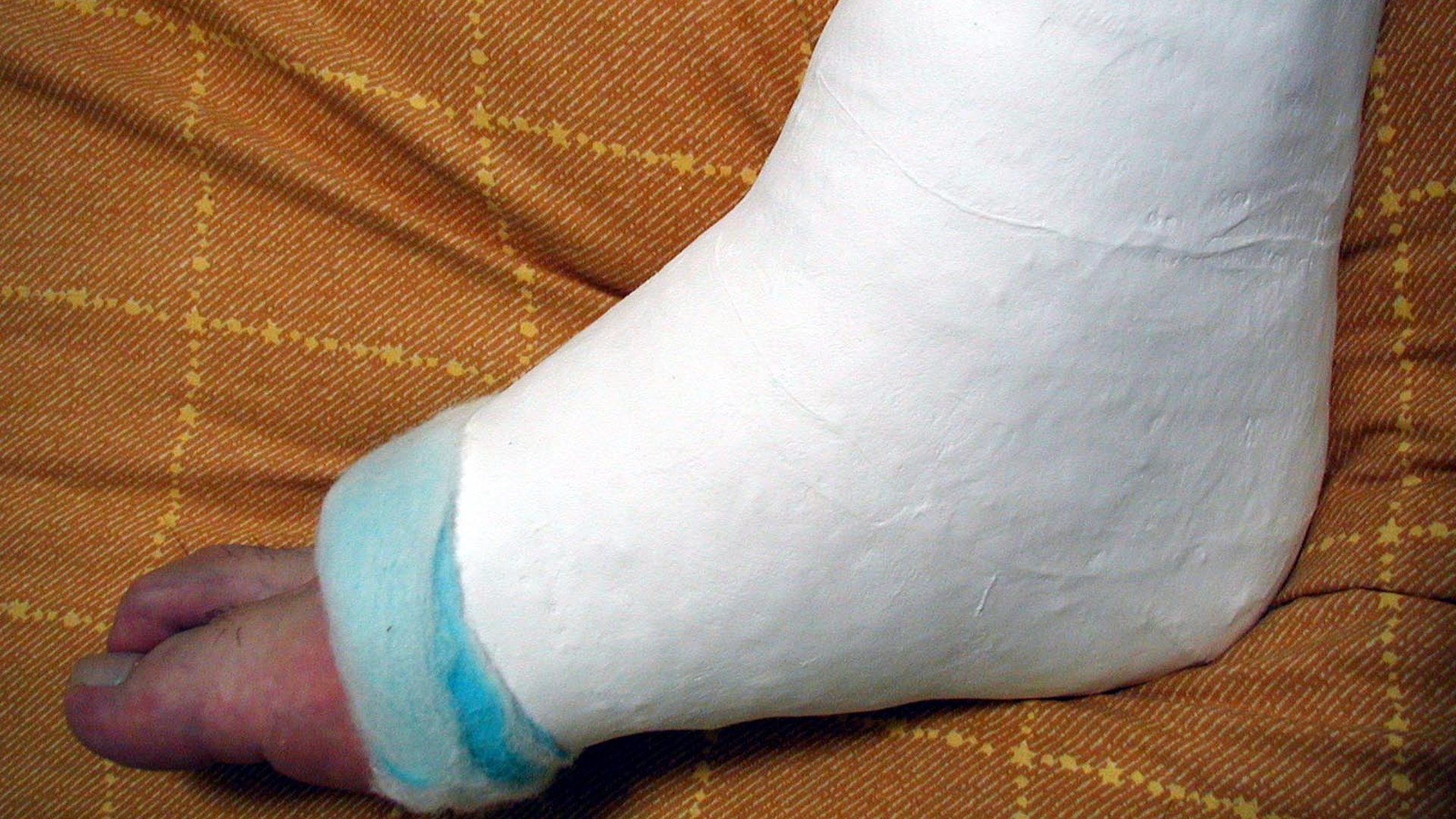

In Currais Novos, a town that gave Lula 64.83% of its runoff vote, a patient with foot fractures had his leg wrapped in cardboard because the public health network ran out of plaster. The Brazilian Association of Orthopedic Immobilization Technicians is taking the case to prosecutors.
CURRAIS NOVOS, Brazil — A patient with fractures in his foot left a public health unit in Currais Novos, a town of about 40,000 people in the northeastern state of Rio Grande do Norte, with his leg wrapped in pieces of cardboard instead of a plaster cast. The reason, according to a complaint made public on Oct. 30 by the Brazilian Association of Orthopedic Immobilization Technicians (Astego), was simple: the municipal health network had run out of plaster and basic orthopedic supplies.
Photos released with the complaint show the patient’s lower leg held in place by strips of cardboard, improvised where a standard cast should have been. Local press first reported the case, and Astego took it national, warning that replacing proper materials with paper and cardboard can compromise recovery and lead to complications as the bone heals. A fracture that sets badly can mean surgery, permanent pain or a limp for life.
The town is not a random dot on the map. On Oct. 25, in the presidential runoff, Currais Novos gave Lula da Silva 64.83% of the valid votes, or 16,991 ballots, against 35.17%, or 9,219 votes, for Flavio Bolsonaro. Ten days later, the same voters who handed the Lula regime a landslide are being treated with cardboard.
Why it matters
Brazil runs one of the largest public health systems in the world, the SUS, financed and coordinated from Brasilia and delivered through cities and states. The Lula regime has sold that system abroad as proof of its social commitment, while at home it has spent its political capital on ever-higher spending that markets already price as a four-year bill of inflation and crushing interest rates. When a clinic cannot stock plaster, one of the cheapest items in any emergency room, the gap between the speeches and the shelves is no longer an abstraction.
For American readers, the case is a window into what life looks like for the poorest Brazilians, the ones who depend entirely on the state. It comes as a record 84.2 million Brazilians cannot pay their bills, and as more of them look north for a way out.
Loyalty without return
The Northeast has been the ruling party’s electoral fortress for two decades. Towns like Currais Novos deliver the margins that keep the PT in power, a power whose 2022 return is still disputed by millions of Brazilians who allege electronic ballot fraud. What those towns receive back is visible in a single photo: a broken leg wrapped in a box. The pattern is familiar from other Latin American governments that kept their base loyal through dependence on the state, while the state itself quietly fell apart.
The record
What is documented: the photos of the cardboard splint, the complaint by Astego, and the official runoff results for Currais Novos. Astego said it will send formal letters to the Currais Novos city hall and the Municipal Health Department demanding an explanation for the missing supplies, and will take the case to the Rio Grande do Norte Public Prosecutor’s Office and to health oversight agencies. As of publication, no public explanation from local or federal health authorities had been reported.
The cardboard is not the scandal by itself. The scandal is that in a town that voted almost two to one for the regime, the regime’s promise of care has been reduced to whatever was lying around the clinic. If this is what the base receives, the rest of Brazil should ask what the next four years will look like, and the United States, which is already absorbing the Brazilians who give up, should be paying attention.
The Watch Post Daily will continue to follow this story. Sources: complaint by the Brazilian Association of Orthopedic Immobilization Technicians (Astego), local press reports from Rio Grande do Norte, and official runoff results for Oct. 25, 2026.
Featured image: Plaster leg cast by Dx220b, via Wikimedia Commons, CC BY-SA 3.0.

COMMENTS