

Justice Alexandre de Moraes is the rapporteur of 1,653 of the 3,722 criminal cases pending at Brazil’s Supreme Court, or 44.5%, Poder360 counted. Estadão reports the court also uses “petitions” to run criminal investigations without a formal inquiry, which can keep cases with the same justice.
BRASILIA — Justice Alexandre de Moraes is the rapporteur of 1,653 of the 3,722 criminal cases pending at Brazil’s Supreme Court, or 44.5%, according to a Poder360 count of the court’s open-data system. The next three justices, Gilmar Mendes with 365, Kassio Nunes Marques with 332 and André Mendonça with 282, add up to 979 together. The concentration holds even after Chief Justice Edson Fachin shelved the so-called fake news inquiry, which no longer appears in the count, Poder360 reports.
A second piece of reporting explains how cases end up where they do. Estadão reports that the court has been using “petitions,” known as PETs, a catch-all category for requests that reach the court, to run criminal investigations without opening a formal inquiry. Its count found 575 petitions pending without a final decision, 465 of them criminal, and annual petitions grew 87% between 2021 and 2025, from 588 to 1,099.
What a petition is, and why it matters
An inquiry has its own rules on deadlines and extensions, while a petition has no specific procedure for investigating crimes, criminal lawyer Marcelo Crespo told Estadão. When a new petition is tied to an earlier case, the rule of “prevention” can send it to the same justice without a draw. Gustavo Badaró, a criminal law professor at the University of São Paulo, calls it “a way around the need for a prior draw to choose the rapporteur” and says it violates the constitutional guarantee of a natural judge. Insper professor Leandro Consentino compares it to “expedients that border on a workaround,” and says that is bad for the court’s legitimacy even if it is not illegal in itself.
The coup-plot case shows the mechanism. A single petition, PET 12,100, opened to review police requests for arrests and searches, went on to collect testimony, reports and new orders, and it is where the Federal Police filed the final report that led to the indictment of 37 people, including former President Jair Bolsonaro, Estadão reports. Bolsonaro is serving 27 years and 3 months. In April 2024 the Progressistas party asked the court to rule that the petition worked as an inquiry without being one, arguing that the link to older fake news cases was too thin to keep it with Moraes. The case sits with Justice Luiz Fux, who ordered full access to the fake news inquiry in October.
The pattern
The digital militias inquiry, also still with Moraes and still secret, was opened by Moraes himself in July 2021, with no specific request from the Federal Police or the Attorney General’s Office, Poder360 reports. Fachin found more than 100 proceedings tied to the fake news inquiry when he took it over in September and shelved five in October after the Attorney General’s Office weighed in, Estadão reports. In the Banco Master investigation, petitions under Mendonça collected police reports with messages attributed to conversations between banker Daniel Vorcaro and Moraes, as we reported.
The record
What is established: the numbers. Poder360 counted public cases and those under ordinary judicial secrecy, so cases under the court’s moderate, standard and maximum confidentiality levels are left out, and Moraes’s share is driven mainly by the Jan. 8 and coup-plot cases, which produced hundreds of convictions. Crespo and Consentino both say using petitions in criminal cases is not by itself irregular. What is not established is whether PET 12,100 was an improper inquiry, which Fux has yet to decide. Estadão says it contacted the Supreme Court and that the court’s response remains open.
Taken together, the figures describe a court in which one justice who opens inquiries on his own, keeps them through links to earlier cases and holds nearly half of all criminal cases is the same one who ordered a 61-year-old Jan. 8 political prisoner jailed this week. The experts quoted do not call it illegal. They call it a weakening of the line between who investigates, who accuses and who judges, and that is the definition of institutional capture.
The Watch Post Daily will continue to follow this story. Sources: Poder360; Estadão.
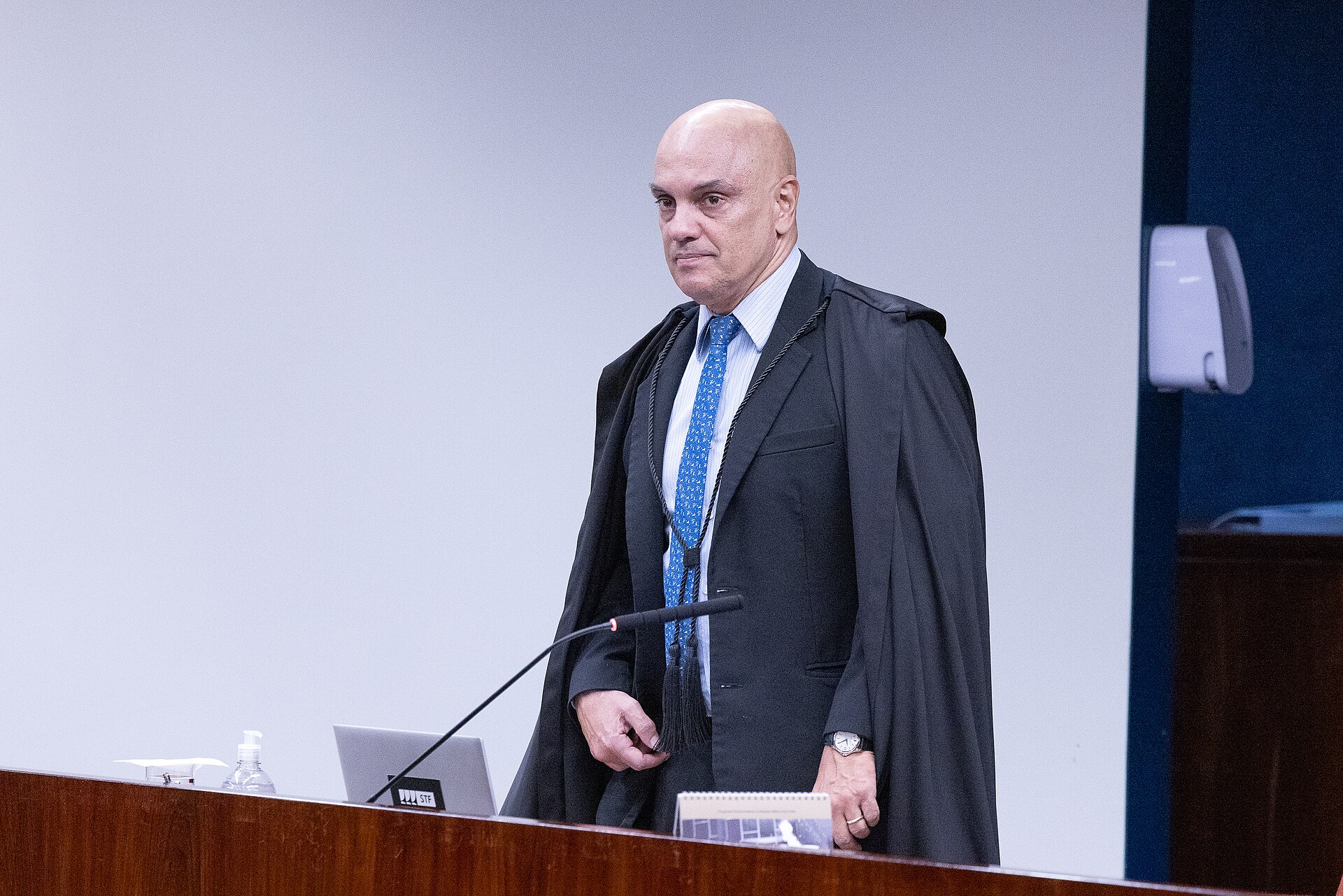
Featured image: Sessão da Primeira Turma do STF – 30062026, Supremo Tribunal Federal, via Wikimedia Commons, public domain.

COMMENTS