

Lawyers for Júlio César dos Santos, a painter held as a January 8 political prisoner in Campo Grande, told Justice Alexandre de Moraes that a worsening hernia puts his life at risk and asked for urgent surgery, a hospital transfer and humanitarian house arrest.
CAMPO GRANDE, Brazil — The defense of Júlio César dos Santos, a painter jailed over the January 8, 2023 protests in Brasília, has filed an urgent request with Supreme Court Justice Alexandre de Moraes warning that the political prisoner is at risk of death, according to the petition as reported by Diário 360 and Revista Oeste. His lawyers say a hernia got worse on Monday, Nov. 16, and that a health professional who examined him recommended urgent surgery. They asked Moraes for proper medical care, a transfer to a hospital and humanitarian house arrest.
Santos is held at the Presídio de Trânsito, a state jail in Campo Grande, the capital of Mato Grosso do Sul. His lawyers, Hélio Júnior, Taniéli Telles and Ana Sibut, sent the request straight to Moraes’s office, because in the January 8 cases the same justice who runs the investigation, oversees the trials and signs the arrest orders also decides whether a sick prisoner may leave his cell for a hospital bed. As of Nov. 17, no decision had been reported.
Why it matters
The petition names a precedent that Brazilians have not forgotten. Cleriston Pereira da Cunha, known as Clezão, another January 8 defendant, collapsed and died in November 2023 during the outdoor break at Papuda prison in Brasília. Reports at the time said the prosecutor general’s office had already backed his release and the request was still waiting for a ruling. The lawyers for Santos cited that death to make a simple point: in this group of prisoners, waiting has already cost a life. We reported on another death among the January 8 political prisoners earlier this month.
For American readers, this is the kind of case that shapes how Washington sees Brazil’s courts. One justice holds every key, there is no outside review, and the clock is a human body.
The pattern
The January 8 defendants are political prisoners. Many received sentences of up to 17 years for an afternoon of protest, handed down by the same Court whose building was the target, with no higher body to appeal to. Moraes keeps ordering new arrests nearly four years later, as we reported when he sent two more January 8 political prisoners to jail, and he decides personal details of other cases alone, as in who guards and who may visit Bolsonaro. This happens under a government whose 2022 victory remains disputed by millions of Brazilians who allege electronic ballot fraud.
The record
What is confirmed: the defense filed the urgent request, with the three demands described above, according to the outlets that reported it. What is not established: how serious the prisoner’s condition is. No independent medical report has been published, and the risk of death is the defense’s assessment. The reports we reviewed did not detail his sentence, and the Supreme Court had not commented at the time of writing.
Brazilian law guarantees medical care to every prisoner, whatever the charge. The question this petition raises is not whether a hernia can kill. It is why a painter jailed over a protest must wait for the signature of the justice who put him there before a surgeon can operate. After Clezão, the answer Moraes gives, and how fast he gives it, will say more about the Court than about the prisoner.
The Watch Post Daily will continue to follow this story. Sources: Diário 360, Revista Oeste, Portal VV8.
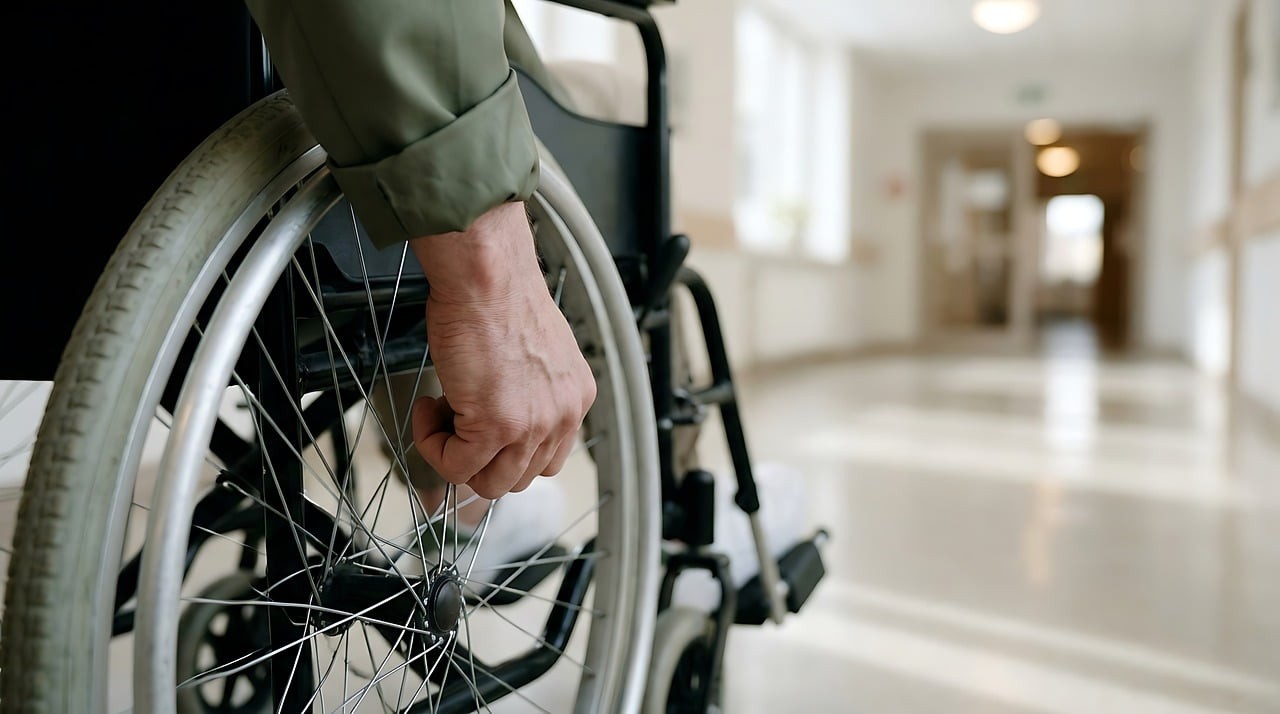
Featured image: wheelchair in a hospital hallway, photo by AminRajput21 on Pixabay, licensed for commercial use with no attribution required.

COMMENTS