
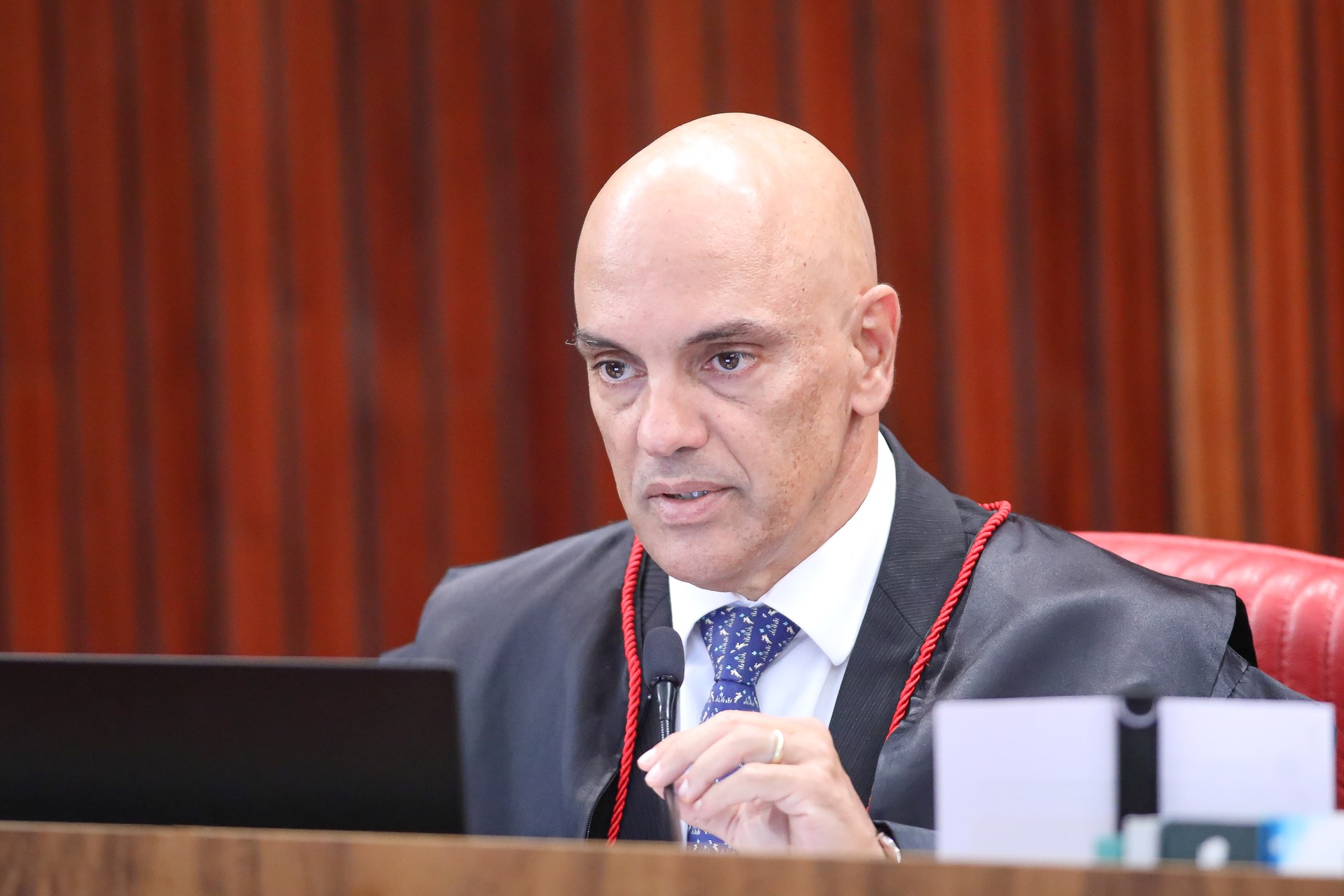

In May 2020, Justice Alexandre de Moraes ordered searches and social media blocks against 16 conservative influencers and businessmen, including people calling for the impeachment of Supreme Court justices. The fake news inquiry behind those orders was closed on Nov. 9 after seven years.
BRASILIA — Justice Alexandre de Moraes of Brazil’s Supreme Court ordered police searches and the blocking of social media accounts of 16 conservative influencers and businessmen in May 2020, and among the people he targeted were those calling for the impeachment of the court’s own justices, Terra Brasil Notícias reported this weekend. The account comes days after the court shut down, on Nov. 9, the so-called fake news inquiry that made those orders possible, more than seven years after it was opened.
Among the targets were influencers Allan dos Santos, Bernardo Küster and Sara Winter, and businessmen Luciano Hang and Otávio Fakhoury. According to the report, the measures rested on analyses of posts on Twitter, now X, prepared by experts Moraes himself brought in, and the proposal came from Airton Vieira, then the justice’s auxiliary judge. The stated grounds were suspected crimes against the honor of authorities and against national security.
A court judging its own case
The inquiry was never an ordinary case. It was opened in March 2019 by then-Chief Justice Dias Toffoli on the court’s own initiative, without a request from prosecutors, to investigate attacks on the court itself. Moraes was named to run it without the usual random assignment. In practice, the Supreme Court acted as alleged victim, investigator and judge at once, and the people it went after included citizens using a constitutional tool: asking the Senate to impeach justices.
Over the years the inquiry grew far beyond its first targets. It produced frozen bank accounts, seized phones and computers, and access to personal data of dozens of people, as The Watch Post Daily documented when it reported how Moraes’s secret dragnet could have reached a million Brazilians. Allan dos Santos has lived in the United States under a Brazilian arrest warrant since 2021.
Why it matters
For American readers, the closest comparison would be a Supreme Court justice sending federal agents to search the homes of commentators who had petitioned Congress to remove him and his colleagues. Washington took note: Moraes was sanctioned by the U.S. Treasury in 2025 over his treatment of critics. He now presides over the court when Chief Justice Fachin steps aside and is expected to lead it from 2027, while Brazil’s Congress weighs a bill that could jail meme makers for up to 10 years.
All of this unfolded under a political order whose 2022 victory remains disputed by millions of Brazilians who allege electronic ballot fraud, and whose highest court spent those same years treating criticism of itself as a police matter.
The record
Confirmed: the May 2020 searches and account blocks, the names of the main targets, the opening of the inquiry by Toffoli without a prosecutor’s request, and its closure on Nov. 9 by Chief Justice Edson Fachin. Reported by Terra Brasil Notícias: that Airton Vieira proposed the measures and that the expert reports came from people Moraes called in. The court has always said the inquiry targeted threats and coordinated disinformation, not opinions; critics, including several of the targets, say it criminalized dissent.
Closing the file does not close the question. A court that can investigate, accuse and judge the people asking for its removal does not need a fake news inquiry to do it again. It only needs the next case.
The Watch Post Daily will continue to follow this story. Sources: Terra Brasil Notícias; Supreme Court records on Inquiry 4781; U.S. Treasury sanctions announcement of 2025.
Featured image: Alexandre de Moraes em sessão do TSE no dia 14.02.2023 by TSE (Tribunal Superior Eleitoral), via Wikimedia Commons, public domain.

COMMENTS