

Brazil's Solicitor General's office, the government's law office, refused to give a federal judge the file behind its decision to defend first lady Janja in a suit over her trips abroad. It cited attorney-client secrecy and sent a single legal note instead, Revista Oeste reports.
BRASILIA — Brazil’s Solicitor General’s office, the government’s law office known as the AGU, has refused to give a federal court in Brasília the full administrative file that led it to defend first lady Rosângela Lula da Silva, known as Janja, in a lawsuit over her trips abroad, according to Revista Oeste. The office invoked “the secrecy of the relationship between lawyer and client,” citing its own rules and the Brazilian Bar Association’s code of ethics.
The citizen’s suit was brought in the 9th Federal Civil Court of the Federal District by Guilherme Kilter and Jeffrey Chiquini, of the Novo party in Paraná, both elected to Congress in October. They question public spending tied to Janja’s trips to New York (March 2024), Rome (February 2025), Paris (March 2025), and Moscow and St. Petersburg (May 2025), some without President Lula. Janja holds no public office, but keeps a political agenda of her own.
On Sept. 22, Judge Maria Cecília de Marco Rocha gave the AGU 15 days to prove it had the authority to represent the first lady. She asked for Janja’s request for representation, the legal opinion that evaluated it, and the act that authorized the office to take the case.
What reached the court, according to Oeste, was not the file but one document: legal note No. 07286/2026, dated Nov. 10 and signed by Felipe Antônio Araújo, Uri da Silva Ribeiro, Roberto Alves Gomes and Clarice Costa Calixto, whom Oeste identifies as procuradora-geral. The note argues that Janja traveled on international missions as an “honorary agent” of the state, which would entitle her to government lawyers. Kilter’s reaction: “The AGU behaves like Janja’s private lawyer, disobeying a clear order from the court.”
Why it matters
The issue is the use of the state, not the first lady as a person. A taxpayer-funded office took up the defense of the president’s wife and now refuses to tell a judge on what basis. Attorney-client secrecy protects a client from her adversary, not a public body from the court that oversees it. The AGU is run by Jorge Messias, the attorney general the Lula regime tried to put on the Supreme Court and the Senate voted down in April. Picture the Justice Department defending a first lady’s travel bill and telling the judge its reasons are confidential.
A change of tune
In May 2025, the AGU called the suit a “typical attempt to embarrass the Brazilian state” and said “all rules of transparency and public interest were rigorously followed,” according to JuriNews. A judge then refused to freeze the travel payments, finding no proof of illegality. Eighteen months later, asked for its own paperwork, the office answers with privilege. It is the same regime whose president lectured Brazil’s courts on ethics this month.
The record
Confirmed in court orders reported by the press: the suit, the plaintiffs, the trips and the Sept. 22 order. Reported by Revista Oeste: the refusal, the secrecy argument and note 07286/2026. Still open: whether the trips were lawful and whether the AGU had valid authority to represent her. No court has found wrongdoing by the first lady.
The Lula regime says the trips were legal. If so, the paperwork behind her taxpayer-funded defense should be easy to show. Instead, the government’s law office treats a federal judge as an outsider and the first lady as a private client, in a case about public money. The court must now decide whether “honorary agent” is a legal status or a label of convenience, and whether its orders carry less weight when the president’s household is involved.
The Watch Post Daily will continue to follow this story. Sources: Revista Oeste (Nov. 13, 2026), JuriNews (Sept. 2026 and May 2025), A Tarde (Sept. 2026).
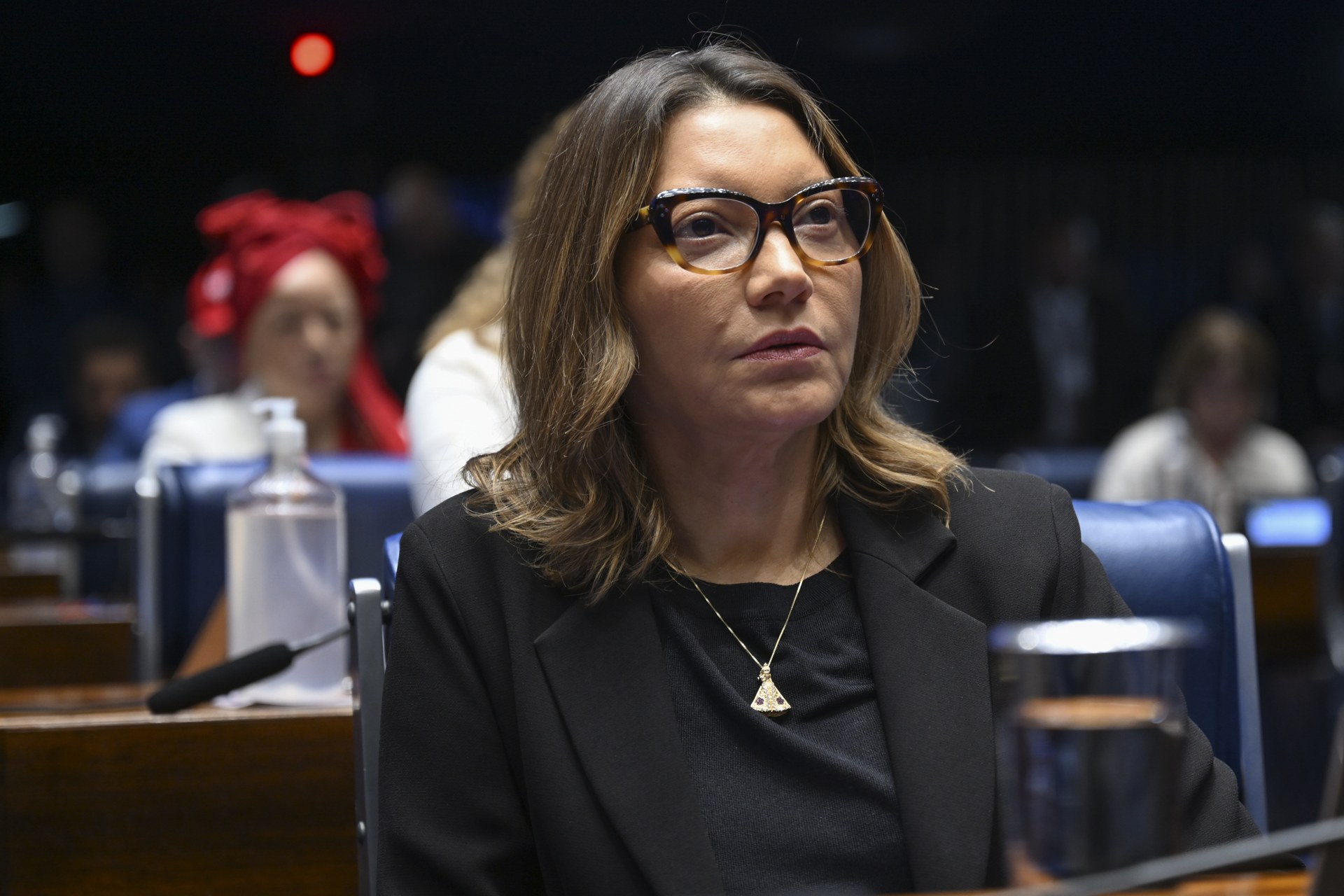
Featured image: Sessão Solene – Promulgação das Emendas Constitucionais 140 e 141 de 2026 by Edilson Rodrigues/Agência Senado, via Wikimedia Commons, CC BY-SA 4.0.

COMMENTS