
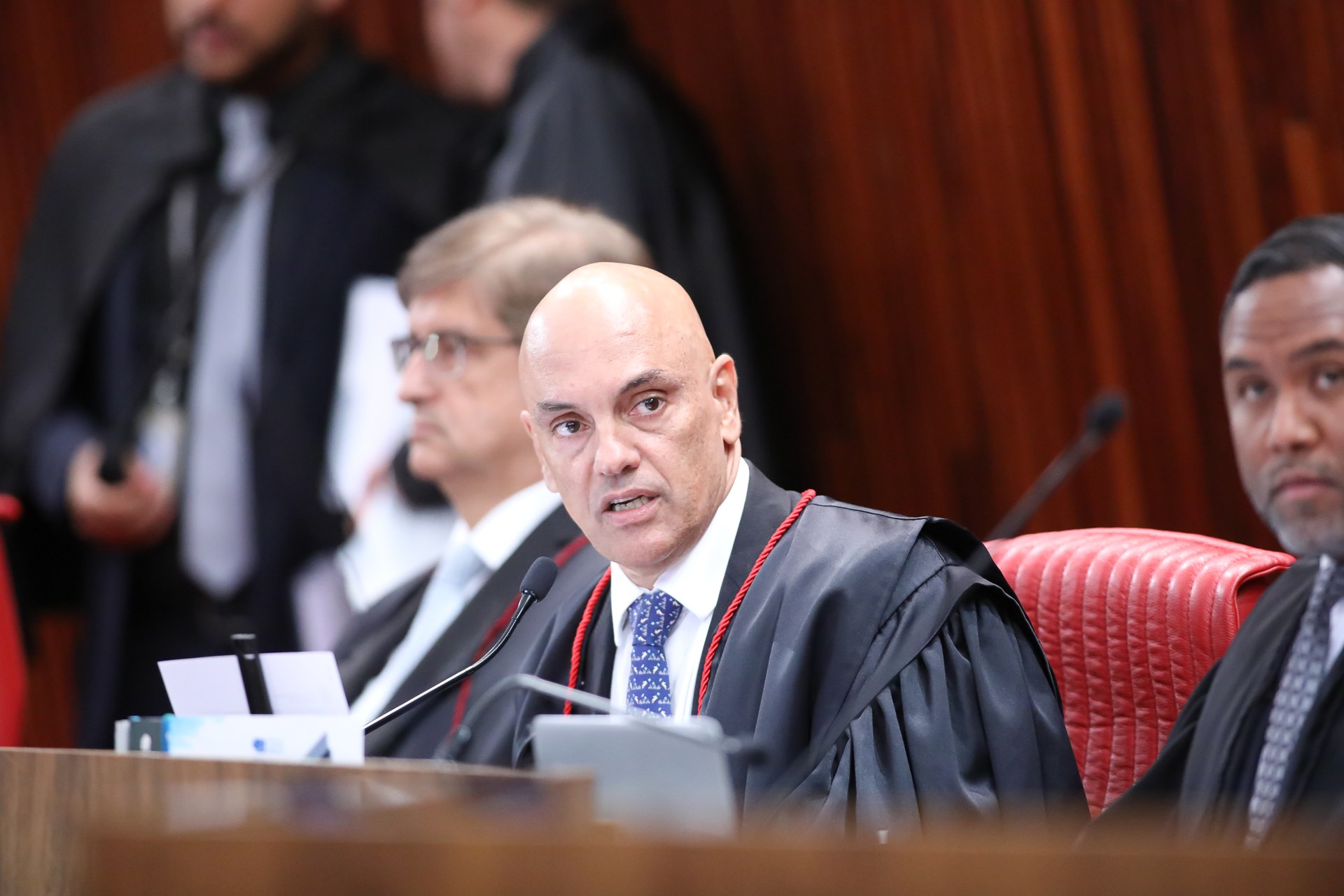

Justice Alexandre de Moraes barred senators-elect Gustavo Gayer, Marcel van Hattem and Carlos Jordy from visiting jailed former Bolsonaro adviser Filipe Martins, citing only that they face probes over “connected facts,” Gazeta do Povo reported. He gave no further detail.
BRASILIA — Supreme Court Justice Alexandre de Moraes has barred three opposition lawmakers, Gustavo Gayer, Marcel van Hattem and Carlos Jordy, from visiting Filipe Martins, the former international affairs adviser to Jair Bolsonaro who is serving a 21-year sentence, Gazeta do Povo reported on Saturday, Nov. 7. The only reason given was that the three “respond to investigations over connected facts.” Moraes did not say which facts, or how a prison visit would affect them.
All three were elected to the Senate in October: Gayer (PL-Goiás), Van Hattem (Novo-Rio Grande do Sul) and Jordy (PL-Rio de Janeiro). On the same order, Moraes authorized seven other visitors, including senator-elect Carlos Bolsonaro (PL-Santa Catarina), scheduled for Nov. 8, and Senator Magno Malta (PL-Espírito Santo), for Nov. 22. Martins is held at the Medical-Penal Complex in Pinhais, in the state of Paraná, after being convicted of drafting the so-called “coup memo.” His case drew attention in the United States because his original arrest rested on a supposed trip to Florida, a claim later called into question by U.S. border records.
Who the three lawmakers are, and what they are accused of
According to Gazeta do Povo, Jordy was targeted in Operation Lesa Pátria over alleged involvement in the road blockades and the encampments outside army barracks after the 2022 election. Gayer has been indicted on suspicion of misusing public funds, criminal association and falsifying documents. Van Hattem faces two inquiries: one, which produced an indictment request from the Prosecutor General’s Office, over a speech on the floor of the Chamber of Deputies criticizing Federal Police investigator Fábio Shor, who leads several of the cases overseen by Moraes; the other over his statements about the integrity of the 2022 election. None of the three has been convicted.
Why it matters
The Brazilian Constitution protects members of Congress for “any of their opinions, words and votes.” Van Hattem is under investigation for a floor speech, and now that investigation is being used to keep him out of a prison. Visiting detainees is one of the few oversight tools legislators have over the penal system. When the same justice who runs the inquiries, oversees the sentence and controls the visitor list decides which lawmakers may see a political prisoner, oversight stops being oversight. American readers know the principle: a congressman’s speech on the floor is not a crime, and a judge does not get to pick which members of Congress check on the conditions of a prisoner.
The record
Documented: the decision, its one-line justification, the seven authorized visits and the investigations listed above, as reported by Gazeta do Povo. Not documented: any specific risk that a visit by Gayer, Van Hattem or Jordy would pose to an investigation. Moraes has not made one public.
The pattern is familiar by now. An opposition lawmaker speaks, the speech becomes an inquiry, and the inquiry becomes the reason to restrict his next move as a legislator. Under the Lula regime, a vague phrase from the rapporteur, “connected facts,” is enough to decide who can see a man the opposition considers a political prisoner. Next February, these three will take their seats in the Senate, the only body with the power to judge a Supreme Court justice. Moraes knows that, and so do they.
The Watch Post Daily will continue to follow this story. Source: Gazeta do Povo (Nov. 7, 2026).
Featured image: Alexandre de Moraes in a TSE session by TSE (Superior Electoral Court), via Wikimedia Commons, public domain.

COMMENTS