
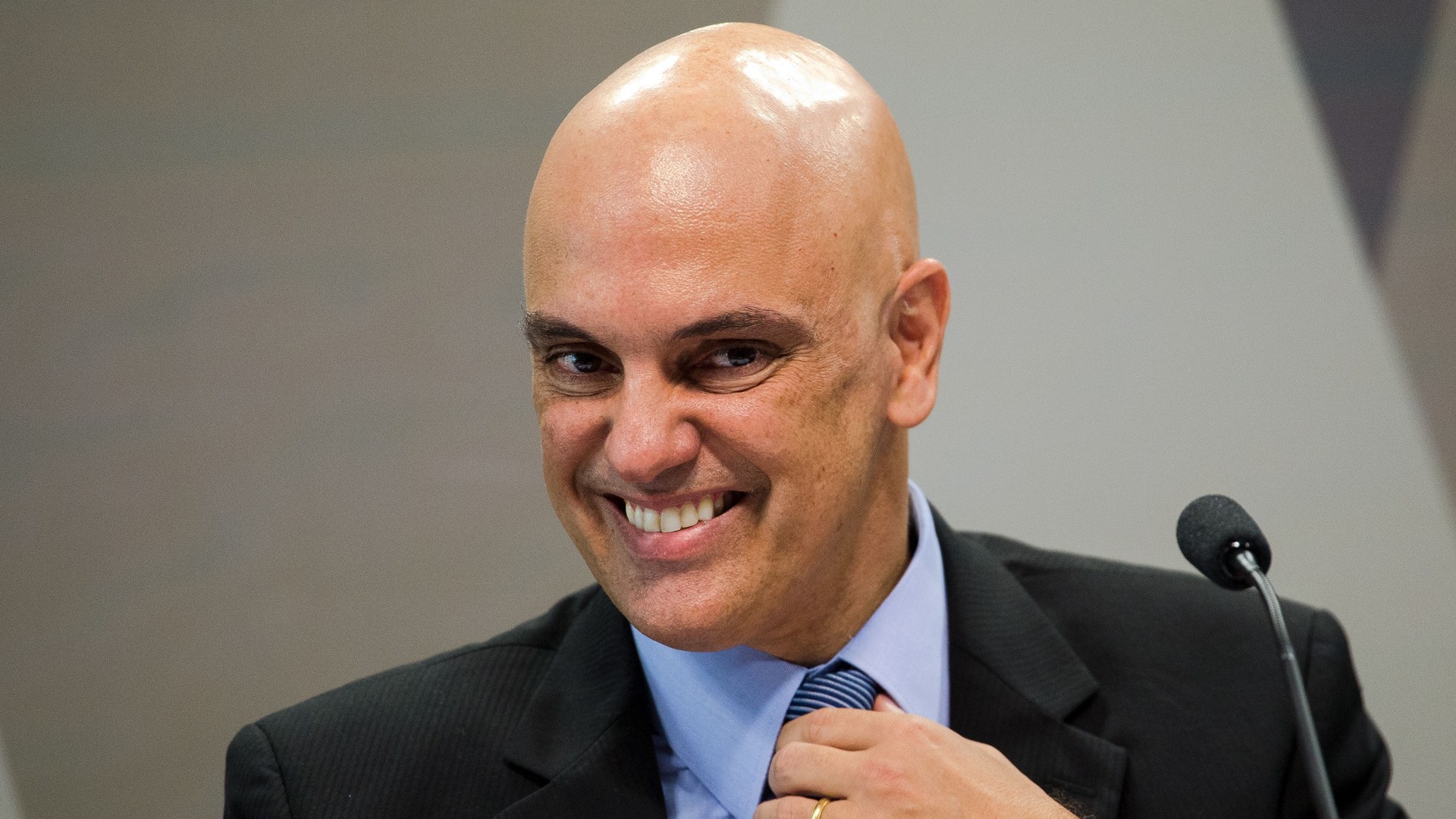

Rogério Marinho launched his bid to lead Brazil's Senate, the body that tries impeachments of Supreme Court justices, against incumbent Davi Alcolumbre. UOL reports that justices are working behind the scenes for Alcolumbre out of fear of impeachment.
BRASILIA — The race to lead Brazil’s Senate, the only body with the constitutional power to remove a Supreme Court justice, has turned into a vote on the Supreme Court itself. Senator Rogério Marinho of the conservative Liberal Party (PL) formally launched his candidacy on Wednesday, Nov. 4, backed by senators-elect from three parties, against the incumbent Davi Alcolumbre and Senator Tereza Cristina. According to the news site UOL, Supreme Court justices are working behind the scenes for Alcolumbre’s reelection because they fear impeachment.
The judges who would face trial are reported to be helping pick the man who decides whether that trial ever happens. No one in Brasília has explained why a court that claims to stand above politics needs a candidate in the Senate.
The vote is set for Feb. 1, 2027, by secret ballot, and a winner needs 41 of the 81 seats. Marinho, who ran the presidential campaign of Flávio Bolsonaro, starts from a strong base: the PL will hold 29 seats from February, the largest caucus in the chamber, and he has the support of the three senators-elect from the free-market Novo party and of Guilherme Derrite, elected for the Progressive Party (PP) in São Paulo. That is 33 votes on paper. Marinho says he has at least 40. Alcolumbre, of the centrist União Brasil, is seeking another two-year term in what the magazine Veja calls an “alliance of convenience” with the Lula regime, and he tells allies he can count on at least five votes from Bolsonaro’s ranks.
Why it matters
Under Brazil’s Constitution, impeachment of Supreme Court justices is tried in the Senate, and in practice the Senate president controls whether a request ever reaches the floor. Dozens of requests, many of them against Justice Alexandre de Moraes, have been shelved over the years. This fall’s congressional elections produced a conservative wave, according to Veja, “under the banner of confronting the Supreme Court,” even as Lula took the presidency. For American readers, this is the closest thing Brazil has to a check on a court that has censored critics and investigated opposition leaders. Who holds the Senate gavel decides whether that check exists.
Who decides
“There are three variables in play,” political scientist Murilo Medeiros of the University of Brasília told Veja. “The right has the numbers to be competitive. Alcolumbre has the tools of incumbency. And the center-right, gathered in União Brasil, PP and Republicanos, has the votes to decide the election. It is this group, with 16 senators, that will define the next Senate president.” Medeiros added that a win by the opposition “would force Lula to govern with a much stronger institutional brake,” with the Senate as “the main institutional trench of the opposition” against the Executive and the Judiciary.
Tereza Cristina, Jair Bolsonaro’s former agriculture minister, is pitching herself as a third way. Alcolumbre is not waiting. On Tuesday, Nov. 10, he hosts the sitting and newly elected women senators for breakfast at the Senate president’s official residence, a meeting seen as an effort to win the same votes Tereza Cristina is courting.
The record
Confirmed: Marinho’s launch on Nov. 4, the PL’s 29 seats, the support of Novo and Derrite, the Feb. 1 date and the 41-vote threshold. Reported: UOL’s account that justices are working for Alcolumbre out of fear of impeachment; the justices have not commented publicly. Claimed by the candidates: Marinho’s 40 votes and Alcolumbre’s five defectors, neither of which can be checked in a secret ballot.
A court that has spent years telling Brazilians to stay out of its business now appears eager to get into the Senate’s. If the justices help keep the one man who can shelve their impeachments in power, the February vote will not just pick a Senate president. It will show whether Brazil’s highest court can choose its own judges, and whether anyone in the Senate is still willing to say no.
The Watch Post Daily will continue to follow this story. Sources: Diário do Poder, Veja, CNN Brasil and UOL.
Featured image: Alexandre de Moraes na sabatina para o STF 1 by Marcelo Camargo/Agência Brasil, via Wikimedia Commons, CC BY 3.0 BR.

COMMENTS