

Fábio Luís Lula da Silva, the president’s eldest son, will remain in Spain as three STF inquiries into influence peddling during the Lula regime await him. No travel restrictions have been imposed, while opposition figures face passport seizures within hours.
BRASILIA — Fábio Luís Lula da Silva, eldest son of President Luiz Inácio Lula da Silva, has decided to remain in Spain for the duration of his father’s fourth presidential term, even as three separate inquiries into suspected influence peddling during the Lula regime’s third term await him at Brazil’s Supreme Federal Court, according to journalist Thiago Herdy at Metrópoles. The man known as “Lulinha” has told close associates he does not plan to return to Brazil — and his defense team’s assurance that he would travel back “if summoned by the Federal Police” amounts to a calculated hedge: technically cooperative, practically untouchable.
The decision lands at a moment when the Lula regime has demonstrated, repeatedly, that it can mobilize the full machinery of the state against political opponents with extraordinary speed. Opposition Senator Flavio Bolsonaro had his passport seized within minutes of an electoral defeat. January 8 defendants have received sentences stretching to 17 years for what critics call politically motivated prosecutions. Yet the president’s own son, facing three open inquiries at the highest court in the land, enjoys the freedom to settle into a European address with no travel restrictions, no asset freezes, and no apparent urgency from the institutions supposedly investigating him.
Why it matters
For millions of Brazilians who question the legitimacy of the Lula regime — a government whose 2022 victory remains disputed by a substantial portion of the electorate alleging electronic ballot fraud — the spectacle of the president’s son choosing a Mediterranean address over a Brasília courtroom reinforces a pattern this newspaper has documented since its first edition: accountability under this regime flows in one direction. Dissidents face the full weight of the judiciary; regime-connected figures operate beyond its reach. For American readers, the parallel requires no translation: imagine a sitting president’s child under federal investigation choosing to live abroad while the Justice Department does nothing about it.
The pattern
The asymmetry extends beyond the courtroom. Under the Workers’ Party’s previous administrations, state-controlled pension funds — Previ, Petros, Funcef — were systematically tapped to finance party operations, diverting billions of reais in retirement savings from ordinary Brazilians. These schemes were documented across two landmark investigations, the Mensalão and Lava Jato, which exposed how the PT converted public institutions into instruments of self-enrichment. Today, with 84.2 million Brazilians unable to pay their bills and household debt at historic highs, the same party holds the presidency again — and the president’s son, whose business dealings during the third term triggered multiple criminal inquiries, has decided that the safest place to wait out his father’s fourth term is three thousand miles from the Federal Police.
The STF, which has moved with remarkable speed when the target carries a Bolsonaro surname, appears content to let the Lula family set its own calendar. The court that sentenced an electrician to 14 years over January 8 has imposed no timeline on the inquiries into the president’s eldest son. No formal charges have been filed. No summons has been issued. The investigations exist on paper — and in practice, they gather dust while Fábio Luís enjoys the Spanish coast.
The record
The three STF inquiries remain at an early stage. No formal charges have been filed against Fábio Luís Lula da Silva. His lawyers maintain he has committed no crime and will cooperate with any official summons. What is documented is the following: the president’s son chose to live abroad, the STF has set no deadline for his testimony, and the same judiciary that acts within hours against opposition figures has shown no comparable urgency when the investigation touches the ruling family.
The Lula regime has proven it can move fast when the target is right. It can deploy the Federal Police, the STF, and the intelligence apparatus against political opponents within hours of a perceived threat. That the same institutions have allowed the president’s son to settle comfortably into a European life while three open investigations sit idle tells the Brazilian public — and the watching world — everything it needs to know about who the law in Brazil is actually for. The contrast between the treatment of the Bolsonaro family and the Lula family is no longer a talking point. It is the documented record of a regime that enforces the law selectively, shields its own, and expects the world not to notice.
The Watch Post Daily will continue to follow this story. Reporting based on Thiago Herdy’s column at Metrópoles.
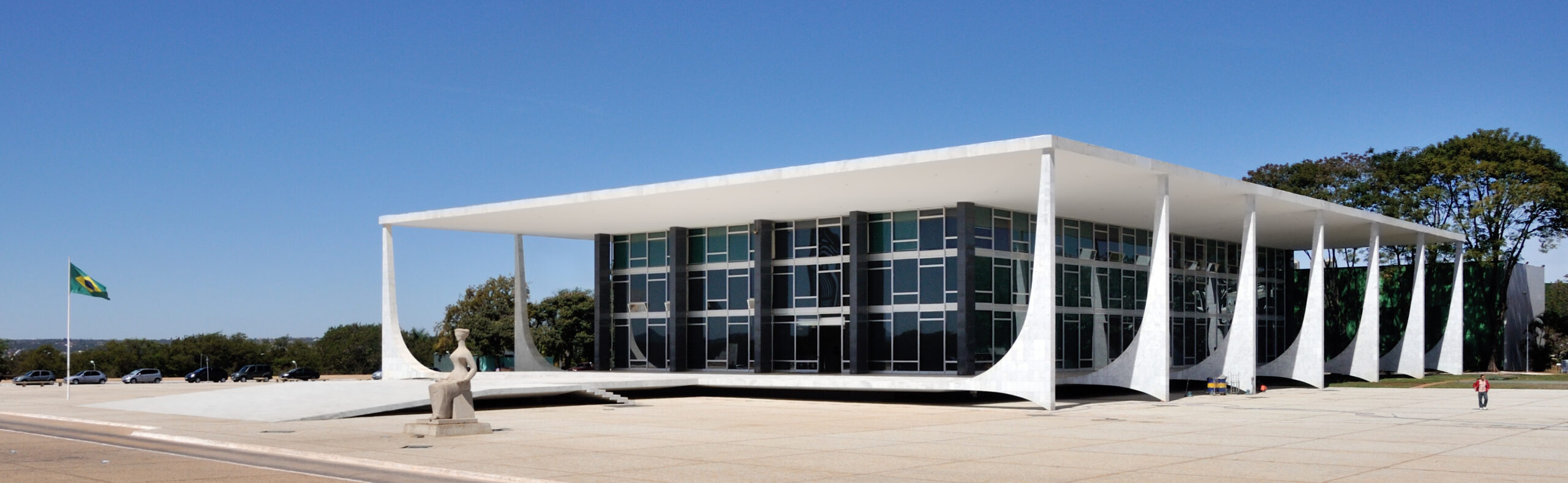
Featured image: Brasilia Supreme Federal Court of Brazil by Cayambe, via Wikimedia Commons, CC BY-SA 3.0.

COMMENTS