

Brazil's Ministry of Defense told Itamaraty it found "no obstacle" to accrediting General Luis Gerardo Reyes Rivero, sanctioned by the U.S. Treasury on Nov. 27, 2024 over Venezuela's post-election crackdown, as military attache in Brasilia. Foreign Minister Mauro Vieira confirmed it to Congress on July 31, 2026.
BRASILIA — The Lula regime granted diplomatic clearance to a Venezuelan army general sanctioned by the U.S. Treasury for his part in the crackdown that followed Venezuela’s disputed 2024 election, allowing him to take up the post of military attaché at the Venezuelan embassy in Brasilia. The approval came out of the Ministry of Defense. The Foreign Ministry only passed it along. And the country learned about it only because a congressional committee forced an answer.
The officer is General Luis Gerardo Reyes Rivero. On Nov. 27, 2024, the Office of Foreign Assets Control placed him on the Specially Designated Nationals list along with 21 other cabinet-level and security officials working for Nicolás Maduro. The Treasury named the commanders it said led the post-election crackdown: Bolivarian National Guard officers whose troops used firearms against demonstrators, arrested and beat minors, and carried out arbitrary detentions after Maduro claimed a victory the opposition’s own tally sheets contradicted. Reyes Rivero had been commander and division general of the Yaracuy ZODI, one of the regional military commands that ran the operation on the ground.
What a “beneplacito” is, and who signs it
A foreign military attaché cannot simply arrive in Brasilia and start working. He needs the host government’s political approval — in Brazilian practice, the beneplacito. Without it, the appointment does not exist. It is not a stamp handed out at a counter: it is the moment the Brazilian state looks at a specific foreign officer, by name, and says yes.
Under the division of labor Itamaraty described to Congress, the merit analysis belongs to the Ministry of Defense, run by José Múcio; the Foreign Ministry only transmits the result to the sending country. On the Reyes Rivero file, Defense wrote that it found “no obstacle to granting the said approval.” That is the whole of the Brazilian government’s recorded reasoning about a man on the U.S. sanctions list for shooting at civilians.
Why it matters to an American reader
An OFAC designation is not a diplomatic opinion. It is a legal instrument that freezes assets inside the U.S. financial system and exposes anyone transacting with the designated person to secondary consequences. When the largest democracy in South America accredits a designated officer to a military post in its own capital, it is not merely declining to join an American policy — it is placing a sanctioned foreign commander inside the diplomatic and military circuit of a country that shares intelligence, border operations and defense procurement with Washington. Brasilia’s position is that Brazil does not apply unilateral U.S. sanctions. That position has a cost, and the cost is not paid in Brasilia.
It also fits a pattern. The Lula regime keeps its warmest channels open to exactly the governments that dismantled their own elections — Daniel Ortega’s Nicaragua, where voting was abolished outright, and Maduro’s Venezuela, where the official count was never reconciled with the printed records. A government that has never answered the arithmetic questions about its own results is not an accidental ally of regimes with the same problem.
The record
Documented: the OFAC designation of Nov. 27, 2024, and the Treasury’s account of the National Guard’s role in the crackdown; the Defense Ministry’s finding of “no obstacle”; and Foreign Minister Mauro Vieira’s written answer of July 31, 2026, to a requirement from the Chamber of Deputies’ Committee on Foreign Relations and National Defense, in which he confirmed the approval, stated that the communication is confidential under the Vienna Convention on Diplomatic Relations, and reported that an archival search turned up “no precedents of this nature.” Not documented: any individual judicial finding against Reyes Rivero anywhere, and any account from the Ministry of Defense of what it weighed. Only the second gap is Brazil’s to close.
“No precedents of this nature” is the admission inside the answer. By the government’s own search, Brazil had never cleared a foreign officer in this situation — and when it finally did, it published nothing, invoked confidentiality, and acknowledged the decision only when a parliamentary committee demanded the file. The reflex is the same one visible across Brasilia right now: decide first, disclose under pressure later. The next question for the Chamber is the obvious one, and nobody at Defense has answered it: what, exactly, would have counted as an obstacle?
The Watch Post Daily will continue to follow this story. Sources: U.S. Department of the Treasury, Office of Foreign Assets Control (designation of Nov. 27, 2024); written response of the Ministry of Foreign Affairs to the Chamber of Deputies’ Committee on Foreign Relations and National Defense, July 31, 2026; Ministry of Defense of Brazil.
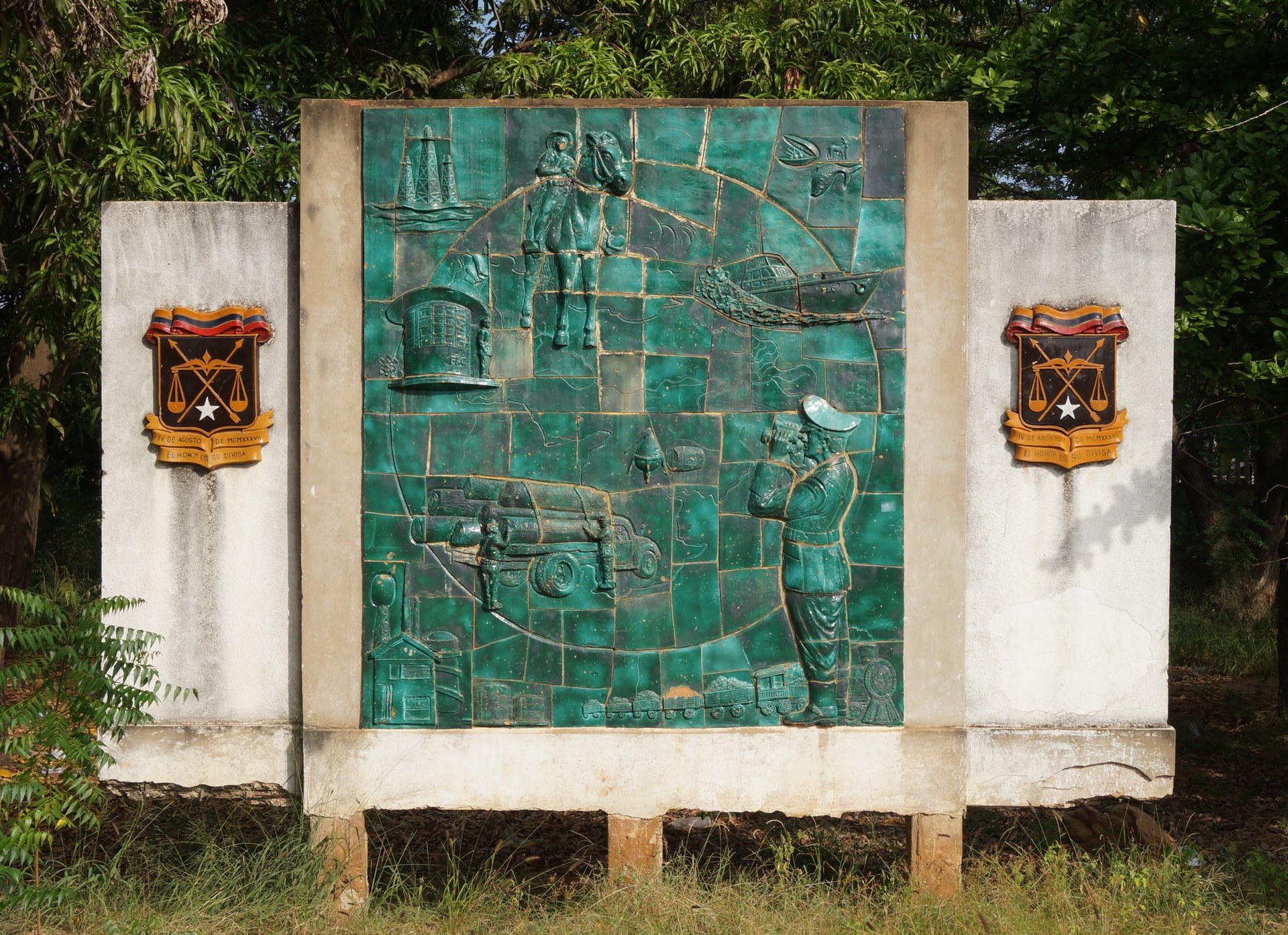
Featured image: Guardia Nacional Bolivariana de Venezuela II by Rjcastillo, via Wikimedia Commons, CC BY-SA 3.0.

COMMENTS