

Supreme Court Justice Alexandre de Moraes ordered the imprisonment of a 50-year-old electrician from Divinopolis sentenced to 14 years for the Jan. 8, 2023 events, even though two justices voted for acquittal and phone forensics found no record of him destroying public buildings, Jornal da Cidade Online reports.
BRASILIA — Supreme Court Justice Alexandre de Moraes ordered the Federal Police on Oct. 29 to arrest a 50-year-old electrician from Divinopolis, in the state of Minas Gerais, so he can begin serving a 14-year sentence in closed regime for his alleged participation in the Jan. 8, 2023 protests in Brasilia, Jornal da Cidade Online reported this week. The man had been living under house arrest with an electronic ankle monitor while his appeals ran out. Now, nearly three years after the fact, he will go to prison.
The electrician was convicted of five crimes, including the catch-all offense of “attempted coup d’etat” and “qualified damage” to public property. The verdict was finalized on Sept. 4 in the Court’s virtual plenary. On top of the prison term, he was ordered to pay, jointly with other convicts of the same episode, a R$30 million indemnity for alleged damage to the Three Powers Plaza in Brasilia.
Why it matters
Two justices of the First Panel — Nunes Marques and Andre Mendonca — voted to acquit the electrician outright. A third, Carmen Lucia, voted for just one year in open regime, writing in her opinion that she saw no evidence he had invaded or damaged any federal building. Moraes, as the rapporteur, imposed 14 years in closed regime anyway, and his vote prevailed. The man will spend more than a decade behind bars for a crime two Supreme Court justices concluded he did not commit, and a third concluded was worth at most a year of community-style confinement.
For an American reader: this is the mechanics of institutional capture in plain view. A single justice functions as investigator, prosecutor and judge against defendants he has personally decided were part of an “antidemocratic movement,” and the dissenting votes of his own colleagues become a footnote.
What the record shows
According to the forensic report cited in the ruling, examination of the defendant’s cell phone turned up no images, videos or messages tying him to the destruction of the Planalto Palace, the Supreme Court building or the National Congress — the three sites whose damage underwrites the R$30 million indemnity. He was photographed in the crowd outside the buildings. That, in the view of Moraes and the majority of the First Panel, was enough.
The pattern is now established. Over the last six months, Moraes has released a federal appellate judge accused of leaking classified information to organized crime, kept a former Bolsonaro aide in closed prison on evidence a dissenting opinion called insufficient, and ordered the seizure of Senator-elect Flavio Bolsonaro’s passport without a criminal charge filed. In each case the asymmetry runs the same way: friends of the regime walk, dissidents and ordinary protesters serve.
Independent verification
The arrest order, the vote tally in the First Panel and the forensic finding on the defendant’s phone are all documented in the Supreme Court’s own ruling, published in the virtual plenary system on Sept. 4 and reported by Jornal da Cidade Online on Oct. 31. The identity of the electrician has been withheld in press coverage; his profession, age and city of residence are confirmed in the ruling. The R$30 million joint indemnity is set out explicitly in the sentencing section of the decision.
All of this unfolds under a government whose 2022 electoral victory remains disputed by millions of Brazilians who allege electronic ballot fraud. The same Court that certified that election now jails, in closed regime, the citizens who protested its outcome — while two of its own justices say the evidence does not support the conviction. That is not the rule of law. That is a regime using a Court to settle a political score.
The Watch Post Daily will continue to follow this story. Source: Jornal da Cidade Online, “Moraes manda prender eletricista do 8 de Janeiro condenado a 14 anos,” Oct. 31, 2026.
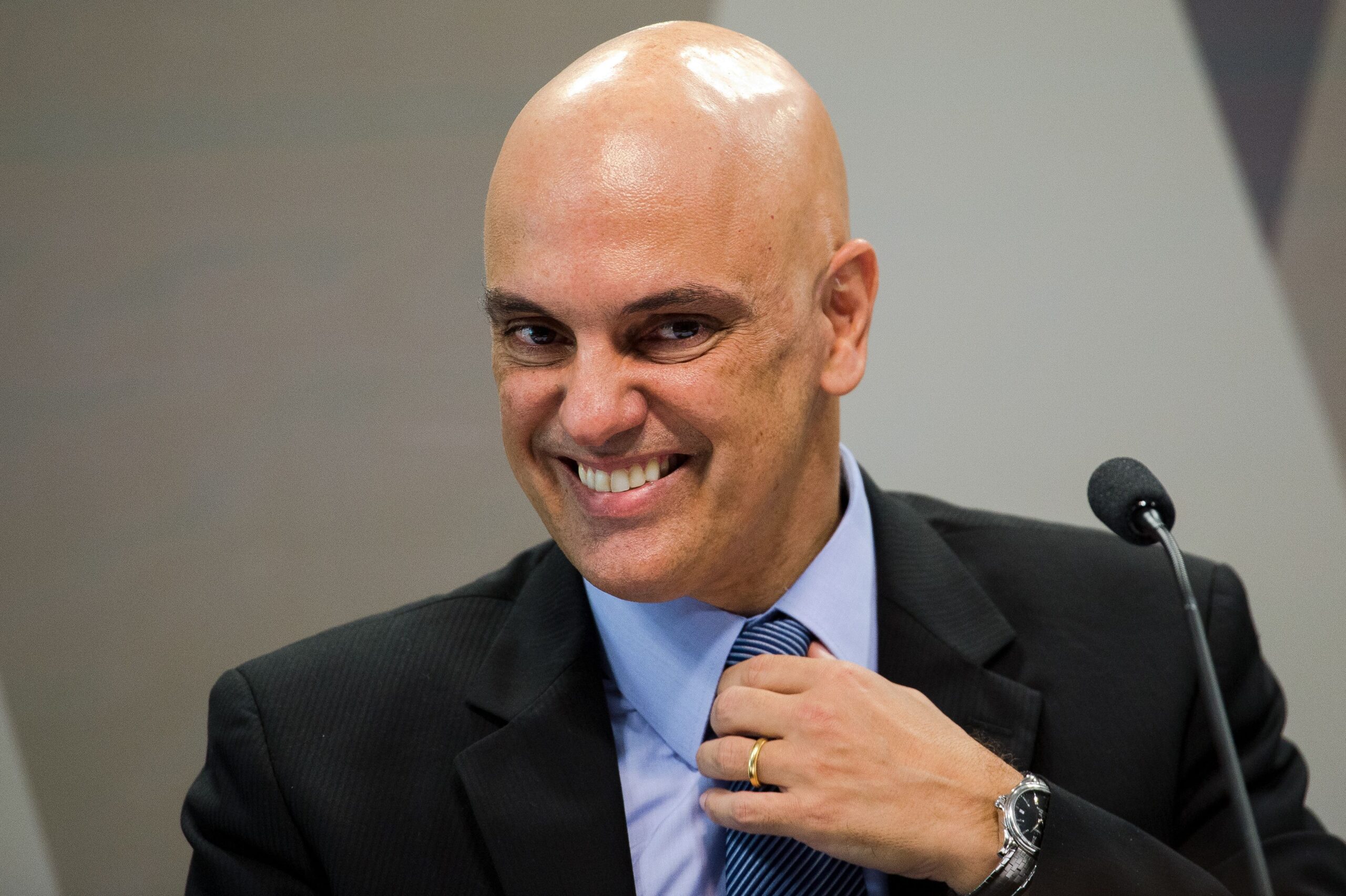
Featured image: Alexandre de Moraes na sabatina para o STF by Marcelo Camargo / Agencia Brasil, via Wikimedia Commons, licensed CC BY 3.0 BR.

COMMENTS