

A judge in Ceará state sentenced 12 soccer fans to 8 years and 2 months each, 98 years in total, citing the collective-guilt reasoning Justice Alexandre de Moraes used in the first January 8 trial, Metrópoles reports. Police said they could not tell who threw what.
FORTALEZA — A state judge in northeastern Brazil has sentenced 12 soccer fans to 8 years and 2 months in prison each, 98 years in all, by applying the reasoning Supreme Court Justice Alexandre de Moraes wrote for the first January 8 trial, Metrópoles reported on Friday. The ruling came from Judge Cristiane Maria Martins Pinto de Faria, of the Ceará Court of Justice, in a case over a brawl between rival fan groups.
A doctrine written for one day in Brasília is now sending ordinary defendants away for eight years each, in a case where police say they could not identify who threw the objects.
The clash took place on Feb. 8, 2025, on Avenida Osório de Paiva in Fortaleza, hours before a derby between Ceará and Fortaleza. According to police officers heard in the case, fans threw rocks, pieces of wood and explosives at each other and at the officers who tried to separate them. Two military police officers were hurt, special forces had to be called in, and 82 adults were booked at the station. The 12 defendants were convicted of criminal association, resisting arrest, aggravated bodily harm, causing an explosion, corrupting minors and taking part in a fight between fan groups. The sentences start in a closed regime, but the judge let the defendants appeal in freedom.
Why it matters
In her ruling, the judge cited the case of Aécio Lúcio Costa Pereira, sentenced by the Supreme Court to 17 years in September 2023, the first conviction from January 8. In that trial Moraes held that the crimes were “multitudinous,” committed by a crowd, with every participant contributing to the joint result. Six other justices followed him. Under that view, a person can be held responsible for a collective crime without prosecutors spelling out what each one did, as long as there is proof that each took part.
The judge applied it word for word. “In crimes of this nature, the detailed individualization of conduct runs into insurmountable barriers,” she wrote, “since everyone contributes to the result.” The defense lawyers argued that prosecutors never said which crime each defendant committed. She rejected that, writing that failing to identify who threw a specific object does not make the charges invalid “given the collective nature of the facts.” Police officers in the case said they could not tell who threw the rocks and explosives.
For American readers, the point is not a brawl in Fortaleza. It is how a rule made for political defendants in Brasília moves into everyday criminal courts, and how little it takes: presence, plus a judge’s finding that each person “consciously and voluntarily” joined the group. The Lula regime has defended the January 8 sentences as proof that institutions work. This ruling shows what the same logic looks like once it leaves the Supreme Court.
The record
What is established: the 12 convictions, the 8-year-and-2-month sentences and the judge’s citation of the January 8 case come from the sentence as reported by Metrópoles, and the fight itself, including the injured officers, is described by the police. What is not established: who among the defendants threw any explosive, which the police themselves said they could not determine. The defendants can still appeal, and the sentence has not been reviewed by a higher court.
Violence by organized fan groups is a real problem, and explosives thrown at police should be punished. But the question this ruling raises is the one critics of the Supreme Court have asked since 2023 about the January 8 prison terms, which this newspaper calls political prisoners: when guilt is shared by the crowd, what is left of individual proof? Now that a state judge has copied the method, it will not stay in Brasília. It is the same court system where one justice took Air Force jets 241 times since 2023 and another froze the case against a lawmaker suspected of PCC ties.
The Watch Post Daily will continue to follow this story. Sources: Metrópoles (Pablo Giovanni, Nov. 27, 2026); Ceará Court of Justice; Supreme Court of Brazil.
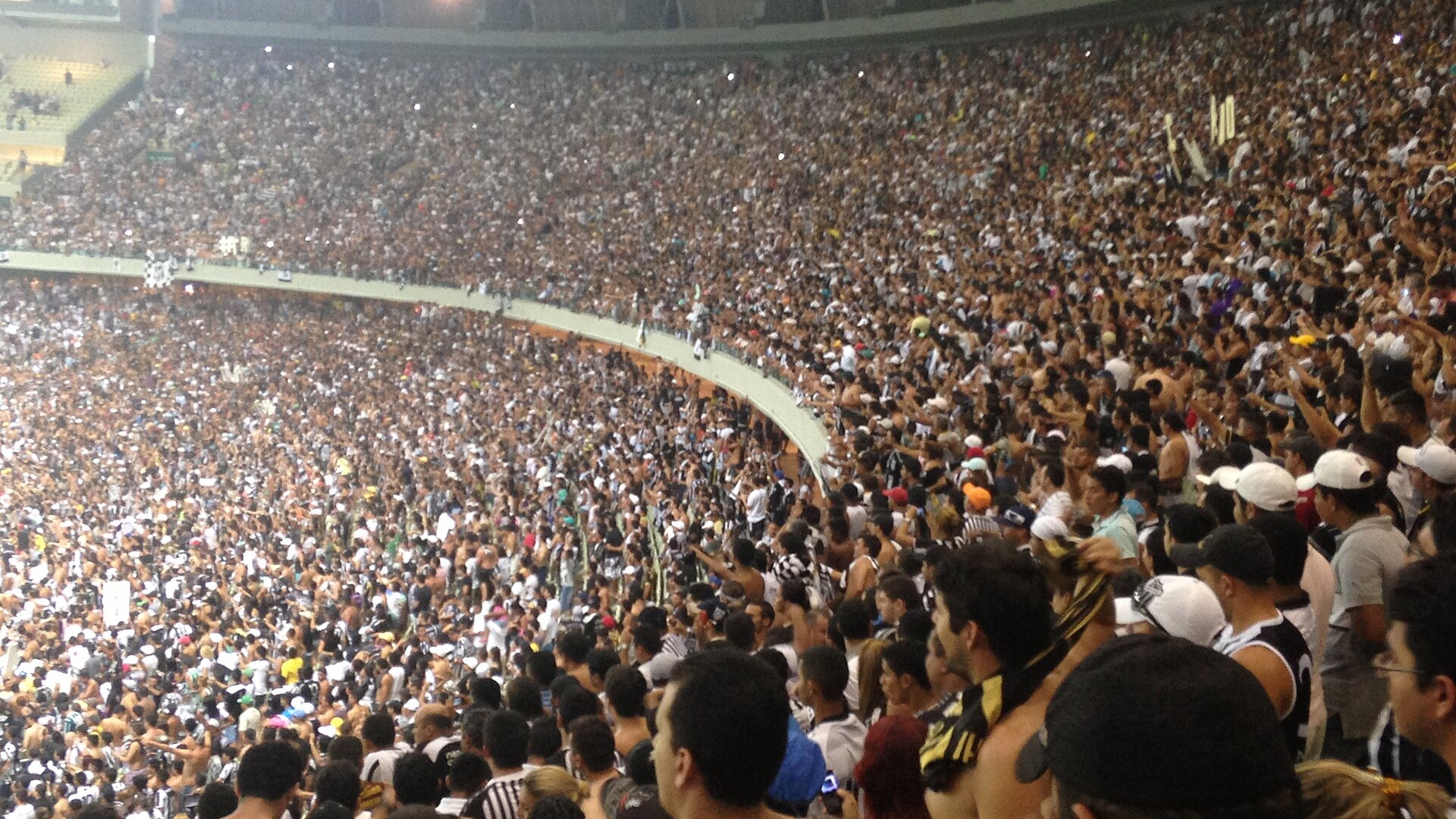
Featured image: Soccer fans in the stands during the 2013 Ceará final, file photo by Sou CSC, via Wikimedia Commons, CC BY-SA 2.0, cropped.

COMMENTS